The Pro-Wedding Formula: How to Create Unforgettable Guest Experiences.
The Pro-Wedding Formula: How to Create Unforgettable Guest Experiences at Orange County Weddings
After photographing and filming over 300 weddings across Orange County—from intimate celebrations at VEA Newport Beach to grand affairs at Pelican Hill Resort—we've noticed something striking: the most unforgettable weddings aren't always the most expensive ones.
They're the ones that follow what we call the Pro-Wedding Formula: a seamless arrival experience, intentional wow moments throughout, and a memorable exit that rivals the entrance.
The best weddings aren't about budget—they're about intention and professional execution. When couples focus on how their guests feel from the moment they arrive until the final send-off, everything else falls into place. The difference between a nice wedding and a professionally executed celebration isn't the price tag—it's these intentional touches that make guests say, "This is one of the best weddings I've ever been to."
Here's the framework that makes any celebration feel professionally executed, based on what we've observed works consistently at Orange County's premier venues.
Part 1: The Arrival Experience
The first 20-30 minutes set everything in motion.
Your guests' experience begins before they even step foot inside your venue. At Pelican Hill Resort weddings, for example, the hillside location requires clear wayfinding from valet to ceremony—without proper signage, guests feel immediately disoriented before your celebration even begins.
Parking & Wayfinding
If you're planning an Orange County wedding and can't afford valet service, that's completely fine—but you need clear alternatives in place. Street parking works when there's obvious signage directing guests exactly where to go. Anxiety about parking, finding the entrance, or wondering "Is this the right building?" immediately puts guests in an uncomfortable state.
What works at Orange County venues:
At Monarch Beach Resort, valet is essential because of the sprawling property layout
At VEA Newport Beach, clear directional signage for the parking structure entrance eliminates confusion
For private estate weddings, consider stationing someone at the parking area to guide guests
When we're shooting Orange County wedding photography, we can always tell which couples thought through the arrival logistics—guests look relaxed and excited rather than stressed and confused.
The Greeter Moment
Someone needs to be stationed at the entrance to welcome guests. This doesn't require hiring additional staff—it can be a trusted family member, a bridesmaid during pre-ceremony setup, or your wedding planner's assistant.
The greeting should include:
A warm welcome and direction to the ceremony/cocktail area
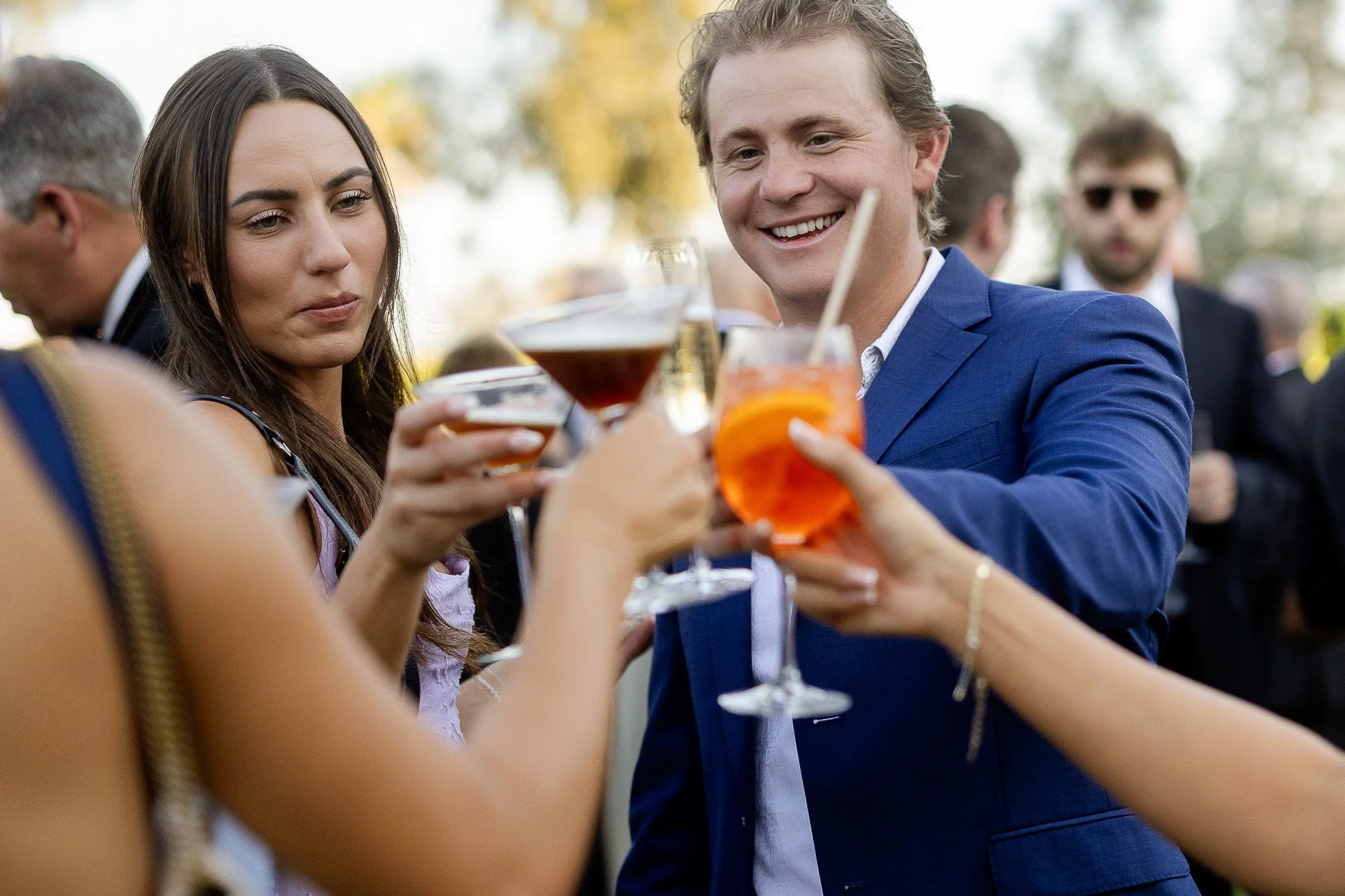
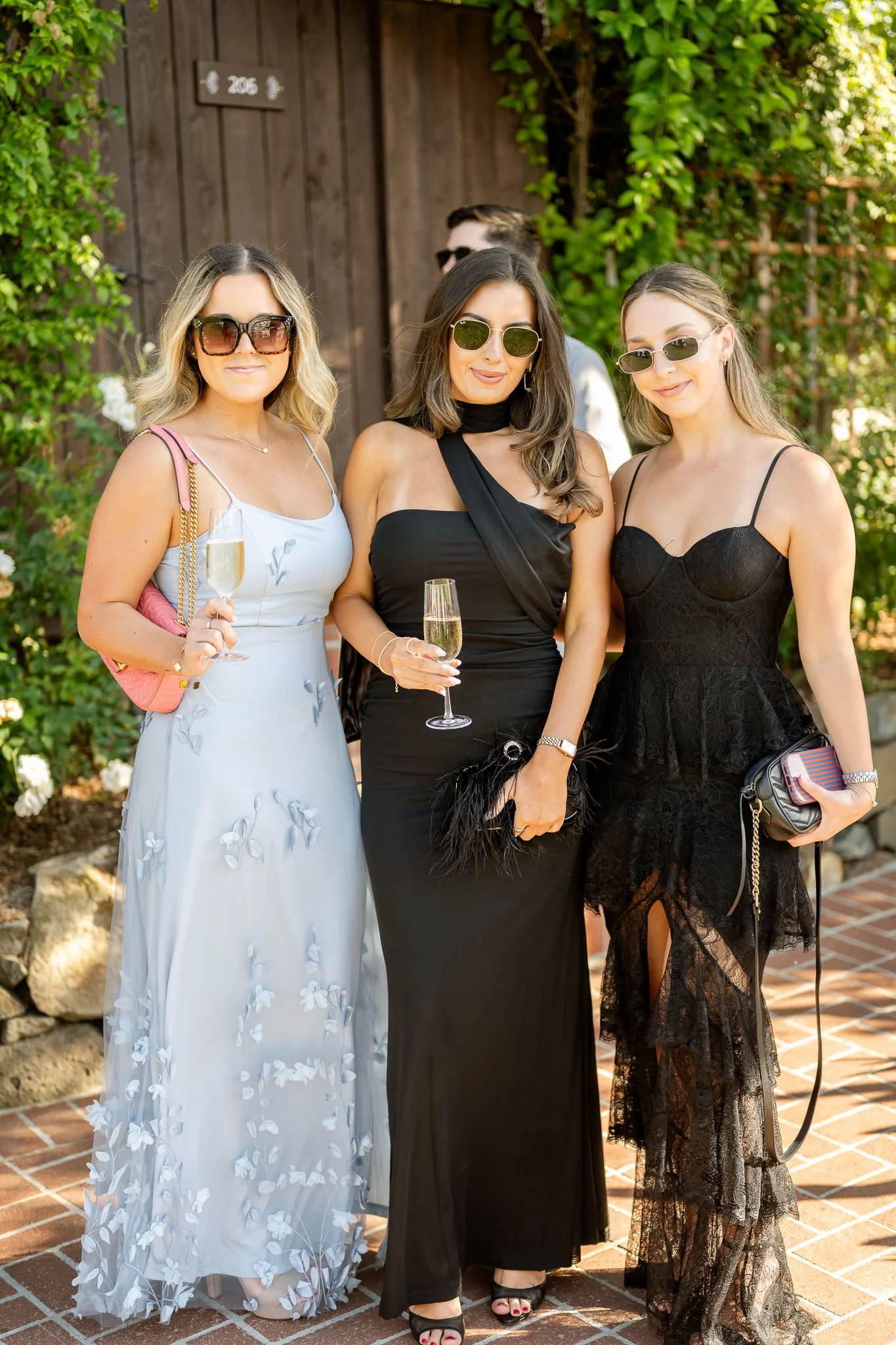
A welcome drink handed directly to guests by catering staff or welcome table.
This simple interaction completely shifts the energy. Guests arrive nervous, not knowing what to do with their hands. When someone immediately greets them with "Welcome! Here's a signature cocktail—the ceremony will begin in about 15 minutes on the ocean terrace," they instantly relax.
Welcome Drinks & First Impressions
As humans, we're anxious creatures who need something to do with our hands. Without a welcome drink, guests default to checking their phones while standing awkwardly.
A welcome drink doesn't need to be expensive:
Signature cocktail (one recipe, batch-prepared)
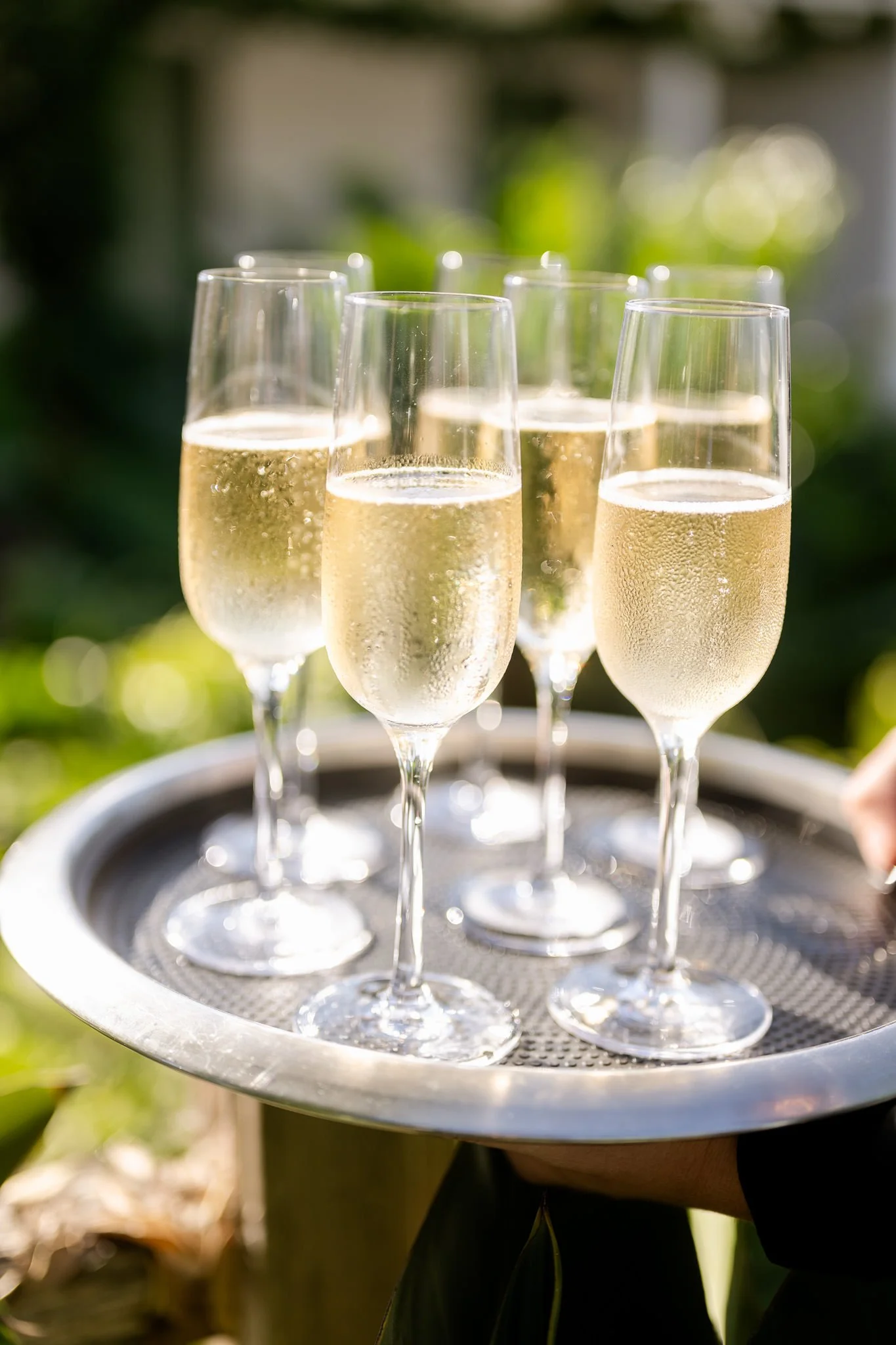
Champagne service with passed trays
Seasonal agua fresca for daytime celebrations
Even a beautifully presented lemonade station works
At Balboa Bay Resort, we've seen couples do welcome drink service on the waterfront terrace—it gives guests something to hold, creates a natural gathering point, and provides an activity while waiting for the ceremony to begin.
Giving Guests Something to Do
Beyond the welcome drink, consider what guests can engage with during those first 20 minutes:
Interactive elements that work:
Guest book alternatives (Polaroid station, sign a print, message in a bottle)
Cocktail lounge seating areas with lawn games nearby
Photo opportunities with your wedding signage or florals
Programs or ceremony details displayed on a welcome table
We capture these moments constantly in our wedding videography—guests naturally gravitate toward activities, and it creates organic, joyful footage of people genuinely enjoying themselves rather than standing stiffly waiting.
Music Strategy: Setting the Tone
Music during arrival is non-negotiable, but volume matters tremendously. You don't need an expensive musician—a well-curated Spotify playlist works perfectly if the sound quality is good.
Volume guidelines we've observed:
Arrival/pre-ceremony: Cocktail volume (audible but not overwhelming conversation)
Cocktail hour: Slightly elevated, creating energy but allowing conversation
Reception: Build progressively from dinner background to dance-floor level
Dead silence when guests arrive feels awkward and uncomfortable. We've photographed weddings where the ceremony space had no music, just the sound of whispered conversations and shuffling feet—it creates anxiety rather than anticipation.
What to play: Choose something that reflects your style but doesn't demand attention. Save statement music (like a live mariachi band or string quartet performance) for moments when you want guests focused on the music itself. Background arrival music should feel welcoming—think Norah Jones, acoustic covers, light jazz, or instrumental versions of songs meaningful to you.
At one Montage Laguna Beach wedding, the couple used a curated playlist of songs from their relationship played instrumentally—guests didn't consciously notice, but the bride's parents later mentioned how emotional it was hearing "their song" playing softly as they arrived.
Part 2: The Wow Factor Throughout (The Middle Experience)
Everything between arrival and exit—the main event.
This is where most couples focus all their attention, and rightfully so. But the "wow factor" isn't just about expensive florals or a celebrity DJ—it's about intentional details that make guests feel cared for and comfortable throughout.
Comfort & Flow: Temperature Control
Southern California weather is generally perfect, but "generally" doesn't cut it for wedding planning. Coastal venues experience dramatic temperature shifts, and failing to plan for this is one of the biggest guest experience mistakes we see.
Orange County venue-specific temperature considerations:
Pelican Hill Resort evening ceremonies can drop 15-20 degrees after sunset. What feels perfect at 6 PM during your ceremony photos becomes uncomfortably cold by 8 PM during dinner. Solutions: pashminas in your wedding colors at each seat, patio heaters strategically placed, or moving dinner indoors to the Mar Vista Ballroom.
Montage Laguna Beach ocean-facing ceremonies deal with unexpected wind. We've filmed ceremonies where guests struggled to hear vows because of wind noise, and programs blew off chairs. Solutions: wind-resistant ceremony programs (cardstock vs. paper), strategic seating layout that accounts for wind direction, wireless microphone systems for officiant and vows.
Summer inland venues (Rancho Las Lomas, private estates) can be brutally hot during cocktail hour. We've photographed 95-degree outdoor cocktail hours where guests retreated to air-conditioned spaces and missed the full experience. Solutions: shaded lounge areas, passed cold towels, signature popsicle drinks, or simply timing cocktail hour to begin after the sun drops.
Temperature comfort solutions that work:
Hot weather: handheld fans at ceremony seats, chilled towel service, cold signature drinks, shaded lounge areas
Cold weather: pashminas, patio heaters, hot chocolate/coffee bar, Irish coffee station
Variable weather: communicate the plan ("The ceremony will be outdoors; we'll have heaters and pashminas available")
When guests are physically uncomfortable, they leave early or disengage. When they're comfortable, they stay, they dance, they're present. As Orange County wedding photographers and videographers, we see this pattern repeatedly—comfortable guests create better energy, better candid moments, and better celebrations overall.
Seating Strategy: The Balance
This might surprise you, but seating strategy dramatically impacts guest experience and flow.
The problem with too much seating: Guests claim a spot and never leave. Cocktail hour becomes static, with people sitting at assigned dinner tables instead of mingling. We've photographed cocktail hours where 80% of guests sat down immediately and stayed there—it kills energy.
The problem with too little seating: Guests stand the entire time, get fatigued, and leave earlier than they would otherwise. This particularly affects older guests, pregnant guests, or anyone in heels for 6+ hours.
What works at Orange County weddings:
Cocktail hour seating: Provide lounge furniture and high-top tables (not full seating for all guests). This encourages movement—guests grab a drink, chat at a high-top, move to a lounge area, circle back to the bar. The flow creates energy and facilitates organic mingling.
At VEA Newport Beach, the indoor-outdoor flow works beautifully when there's strategic seating—lounge areas by the fireplace, high-tops on the terrace, space to move between both. Guests naturally explore the venue rather than claiming one spot.
Reception seating: Everyone gets a seat, but consider spacing. Cramped seating makes guests feel claustrophobic. Adequate spacing (with room to push chairs back, navigate to the dance floor) makes the same room feel comfortable and elevated.
Weather Backup Planning: The Non-Negotiable
If you're planning any outdoor element at your Orange County wedding, you need a weather backup plan. Not a vague "we'll figure it out" plan—a detailed, decided-upon backup.
Weather isn't just about rain. Consider:
Wind: Can blow over ceremony structures, make vows inaudible, ruin hairstyles
Heat: Makes guests uncomfortable, causes makeup to melt, shortens celebration attendance
Humidity/morning marine layer: Common June-July at coastal venues, makes everything feel damp
Unexpected rain earlier in the day: Even if it stops, wet grass and chairs remain
The backup plan conversation with your venue should include:
What is the backup space specifically? (Not "we have indoor options"—which room?)
What time must the indoor/outdoor decision be made?
Who makes the final call, and how is it communicated?
Does the backup space require different setup/layout/decor?
Pro approach: Visit your backup space during your venue tour. Visualize your ceremony there. Discuss it openly with your planner. Make the decision criteria clear in advance ("If it's raining at 2 PM, we're moving indoors. If it's drizzling at 4 PM, we're staying outdoors with clear umbrellas."). Communicate the plan to your vendors, including your photographer and videographer.
Food Presentation & Service: The Details That Matter
Food is expensive—make it count through presentation, timing, and service excellence.
Timing matters more than menu selection. Guests should receive substantial food approximately 60 minutes into your event. This could be:
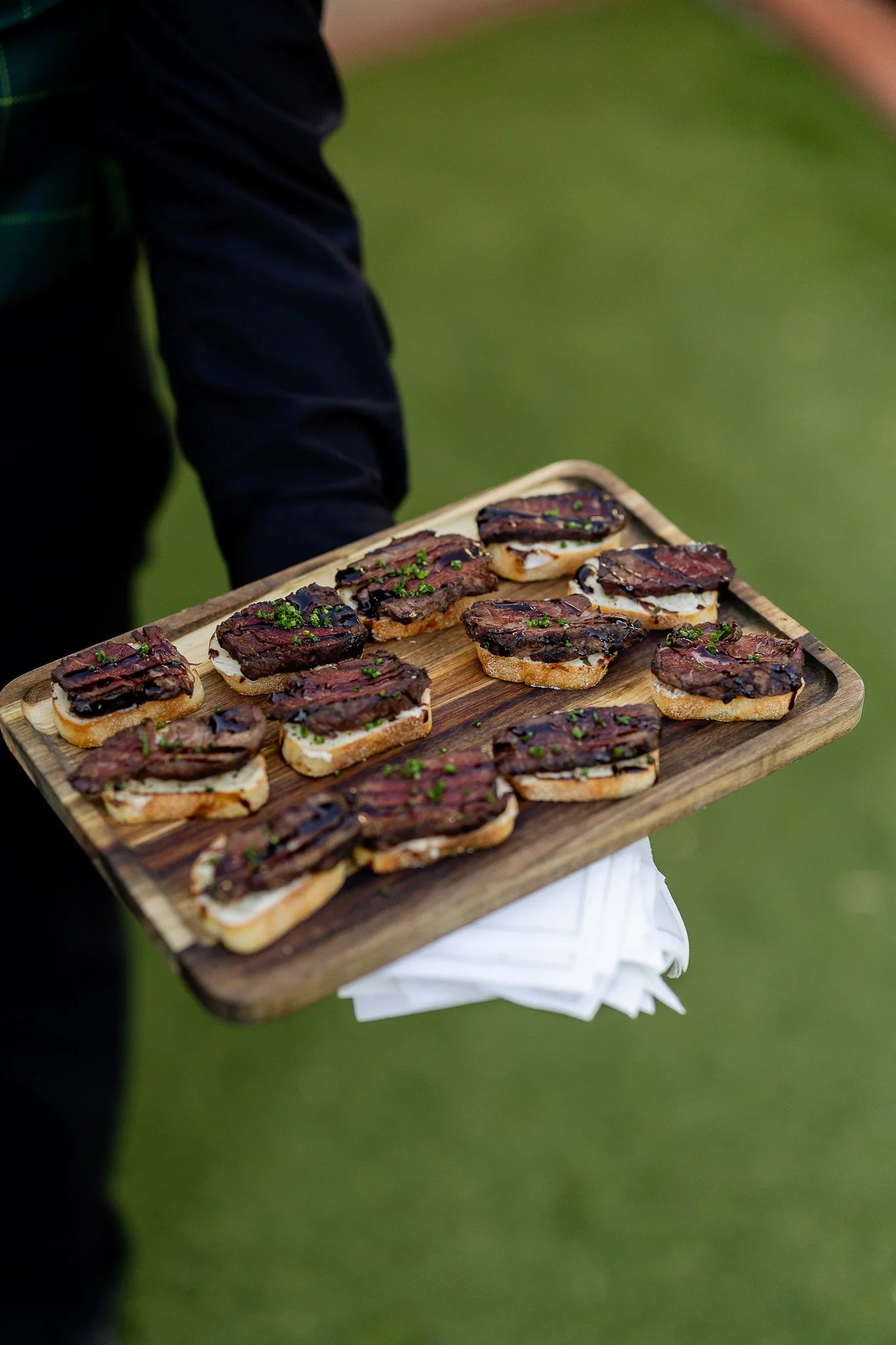
Passed appetizers during cocktail hour (starting within 5-10 minutes of guests arriving or transitioning from ceremony to cocktail hour)
Stationed appetizers available immediately
Dinner service beginning 75-90 minutes after ceremony end
Hungry guests become uncomfortable guests. We've filmed receptions where dinner was delayed 90+ minutes—guests got drunk faster, energy dropped, and people left before dancing even began.
Clearing service is essential. Nothing signals "unprofessional event" faster than dirty plates accumulating on cocktail tables or dinner tables. This doesn't require expensive catering—it requires intentional clearing:
Station someone to bus cocktail hour tables every 15 minutes
Clear dinner plates promptly after each course
Pause all clearing service during toasts and speeches—the noise from plates and movement from wait staff distracts from these meaningful moments. Timing service during natural transition periods creates an elevated, dedicated experience for everyone in the room.
At Waldorf Astoria Monarch Beach weddings, their catering teams excel at invisible service—plates disappear, glasses are refreshed, and guests never feel neglected. But we've also seen couples execute this beautifully with budget caterers simply by requesting dedicated clearing service.
Food labeling prevents anxiety. With dietary restrictions now the norm rather than exception, unlabeled food creates guest anxiety:
Label all passed appetizers with small signs at serving stations
Include major allergens (dairy, gluten, nuts, shellfish)
Mark vegetarian/vegan options clearly
Don't make guests guess what they're eating
We often incorporate a few photos of the appetizers and food displays when covering weddings—beautifully labeled food looks intentional and elevated, even when the menu itself is simple.
The late-night food moment: Consider a sweet treat, coffee service, or late-night snack 3-4 hours into your reception. This serves multiple purposes:
Gives guests a second wind for dancing
Provides something to take home (packaged cookies, mini pies)
Signals "the party continues" rather than winding down
Helps guests who drank but didn't eat much at dinner

Music Energy Building: The Progression
Your ceremony should feel different from cocktail hour, which should feel different from dinner, which should feel different from dancing. Music is how you create that progression.
What we've observed works:
Ceremony: Minimal music (processional, recessional, perhaps one song during unity ceremony). Silence during vows is powerful—let the moment breathe.
Cocktail hour: Upbeat but conversational. Live acoustic musician, string quartet, or curated playlist. Volume allows conversation but eliminates awkward silence.
Dinner: Background music that complements conversation (think restaurant ambiance). This is not the time for high-energy dance music—guests are talking, toasts are happening, emotional moments are unfolding.
Dancing: Build progressively. Start with upbeat-but-accessible (classic crowd-pleasers), then increase tempo and energy as the night progresses. Your last hour should be peak energy.
One wedding at Rancho Las Lomas started cocktail hour with a mariachi band, transitioned to a DJ/violinist duo during dinner, then moved to full DJ for dancing. The energy built naturally, and guests stayed engaged throughout because something was always changing.
Lighting & Ambiance: Creating the Feeling
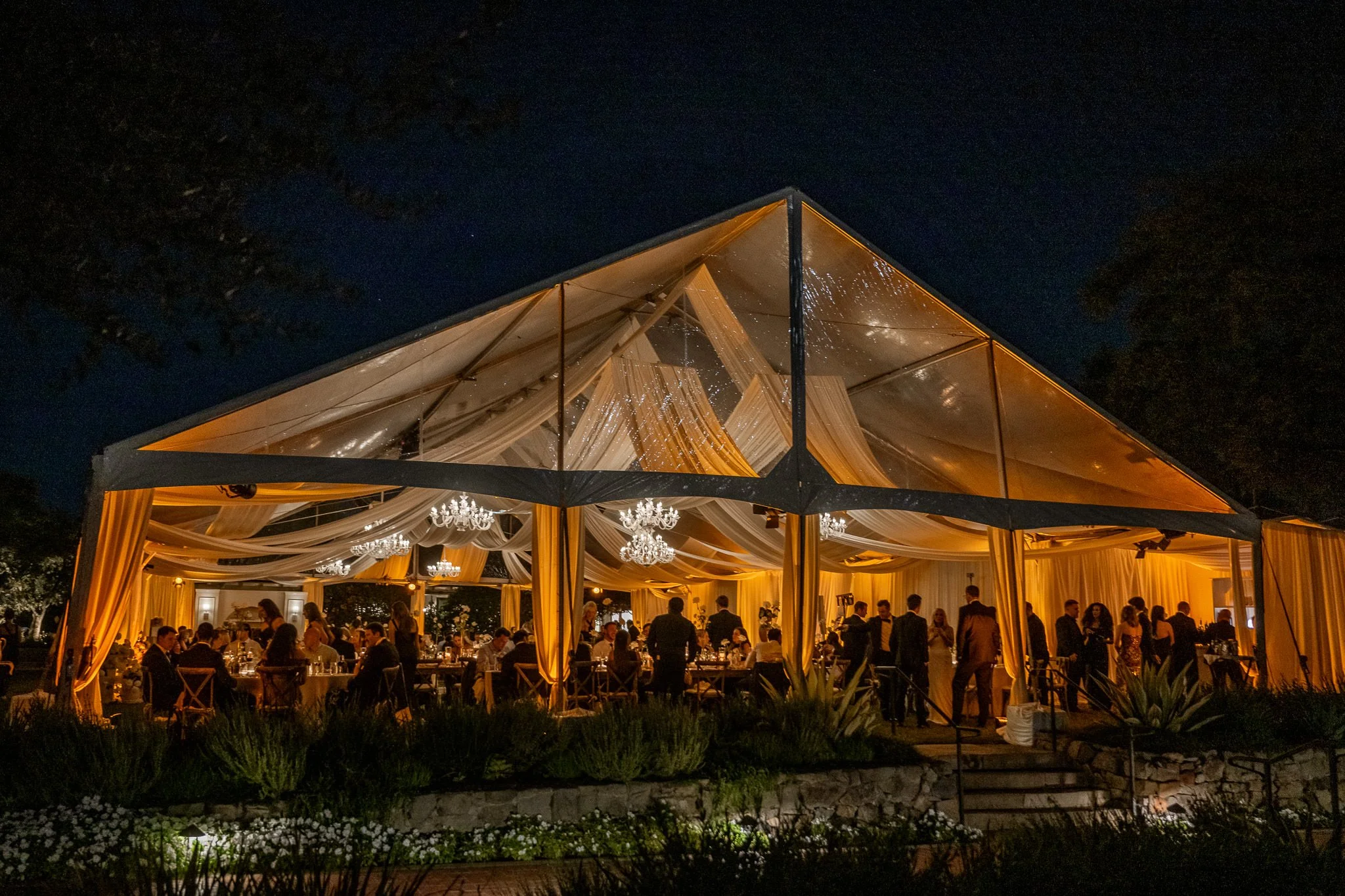
When you're planning on a budget, lighting is where to invest over expensive decor. Proper lighting transforms any space.
Turn off overhead lights. This single change elevates ambiance immediately. Overhead fluorescent or bright ballroom lighting feels institutional. Ambient lighting feels intimate and intentional.
What to use instead:
Uplighting on walls (can be rented affordably)
String lights or bistro lighting for outdoor spaces
Candles (lots of candles—votives, pillars, tapers)
Pin spotting on centerpieces or key areas
Gobo monogram projection
At Pelican Hill Resort, the architecture is stunning but benefits enormously from intentional lighting. We've filmed the same ballroom with overhead lights (feels like a hotel conference) and with uplighting + candlelight (feels like an elegant celebration).
Refer to our guide on the best time for wedding photos for more on how natural light timing impacts your entire day's atmosphere.
Scent considerations: This seems minor but impacts perception dramatically. Beautiful spaces have a signature scent—hotels pump specific fragrances, luxury stores use scent marketing.
For weddings:
Scented candles (subtle, not overwhelming)
Fresh flowers (ensure they smell good—some popular wedding flowers have unpleasant scents)
Avoid competing food smells near ceremony spaces
Consider the natural venue scent (ocean air at coastal venues, garden scents at estate venues)
Branding & Intentional Details: Making It Yours
These details don't require a luxury budget—they require thoughtful execution.
Customization opportunities that make impact:
Custom cocktail napkins with your names/wedding date/meaningful quote
Monogrammed ice cubes in signature drinks
Branded food wrapping or serving boats
Custom ceremony programs or menus
Signage in your wedding colors/fonts
Welcome bags with local recommendations and thank-you note
When we're asked to photograph these details for couples, they appear in wedding albums as meaningful touchpoints. Why? Because personalized details feel intentional rather than generic.
At one Inn at The Mission Hotel in San Juan Capistrano wedding, the couple branded everything—cocktail napkins, food boats, ice cubes, even the late-night cookie bags. The total additional cost? Under $300. The impact on guest perception and photo memories? Significant.
Where branding matters most:
Cocktail napkins (guests use 3-4 throughout the night—high visibility)
Bar signage (everyone visits the bar multiple times)
Food stations (people spend time here, look at details)
Welcome signage (first impression sets tone)
Interactive Moments & Wow Factors: The Unexpected
The weddings guests remember most include something unexpected—an element they didn't see coming.
Interactive stations that work:
Live painter creating ceremony or reception art (guests can watch progress)
Photo booth with props and instant prints (appeals to all ages)
DIY craft station (paint a onesie at baby showers, customize wine bottles, decorate cookies)
360 photo booth (trending heavily in 2026)
Surprise performance (flash mob, cultural dance, firework show)
We photograph several Indian weddings a year, and during the reception, families of the bride and groom always perform Bollywood-style dance performances that energize the crowd and create fun, exciting moments—especially for guests attending their first Indian wedding. These cultural performances become highlights that guests talk about for years.
The key principle: Give guests something to do, watch, or participate in beyond sitting at tables. Weddings that flow between seated moments and interactive experiences keep energy high and guests engaged.
As wedding content creators, we see how these interactive moments perform incredibly well on social media—they're share-worthy, memorable, and authentic.
Part 3: The Grand Exit
Ending as strong as you started.
Most couples obsess over the entrance and forget the exit. But your guests' final impression is just as important as their first—it's what they remember driving home.
Ending Intentionally: Making It Clear
One of the most awkward wedding moments is when guests don't know if the party is over. They trickle out slowly, uncertain, while the couple and remaining guests wonder "Is everyone leaving? Should we keep going?"
How to end with intention:
Announce the timeline. Your DJ or planner should announce 30 minutes before the end: "We have 30 more minutes of dancing, then we'll gather outside for [couple's names'] sparkler exit!" This gives guests a clear endpoint and allows those who want to leave early to do so without feeling rude.
Have a defined closing moment. This could be:
Sparkler or grand exit (classic and photo-worthy)
Last dance (couple dances alone while guests circle around)
Last song announcement ("This is our final song of the evening—thank you for celebrating with us!")
Champagne toast send-off
At one VEA Newport Beach wedding, the couple did a final private last dance at 10 PM, then opened the after-party lounge for guests who wanted to stay. It provided a clear ending to the official reception while allowing the party to continue for those who wanted more.
Avoid the slow fade. When couples don't plan an ending, the celebration peters out slowly—the DJ keeps playing to an emptying room, vendors wait awkwardly to break down, and the couple doesn't get a proper send-off moment. Plan the ending as intentionally as you planned the ceremony.
The Exit Moment: Path & Spacing
If you're planning a grand exit (sparkler exit, ribbon wands, flower petals, etc.), logistics matter enormously.
The path and spacing are critical. We photograph grand exits constantly, and they only work with proper planning:
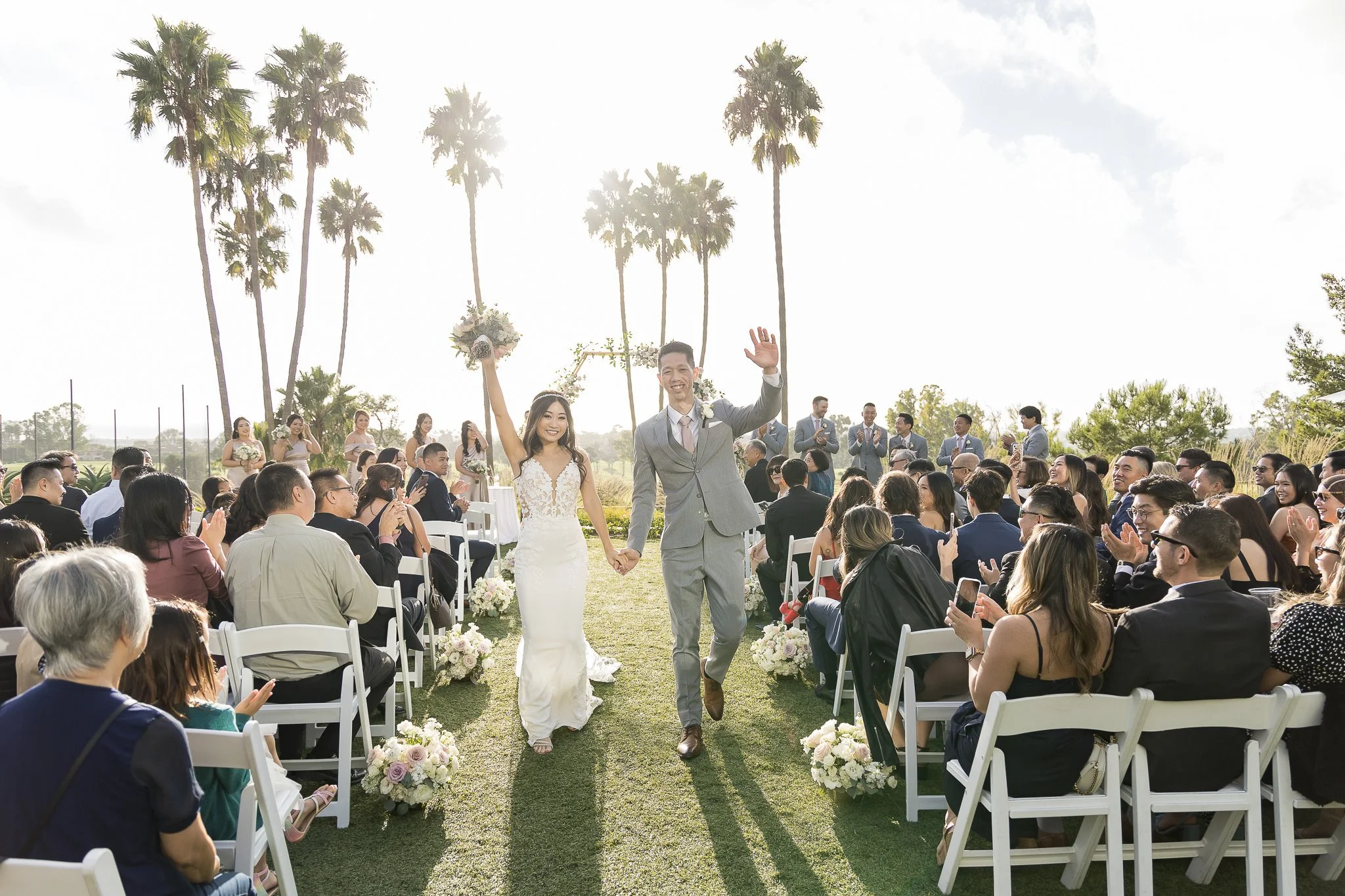
Long, straight pathway: You need at least 20-30 feet of clear path for the couple to walk through. Short, cramped exits feel rushed and don't photograph well.
Wide tunnel formation: Guests need to stand far enough apart to create a tunnel the couple can comfortably walk through—typically 6-8 feet wide. Too narrow and the couple has to navigate around guests; too wide and it doesn't feel intimate.
Clear directives: Station someone to position guests in two lines before the couple emerges. Without this, guests cluster randomly and the exit falls apart.
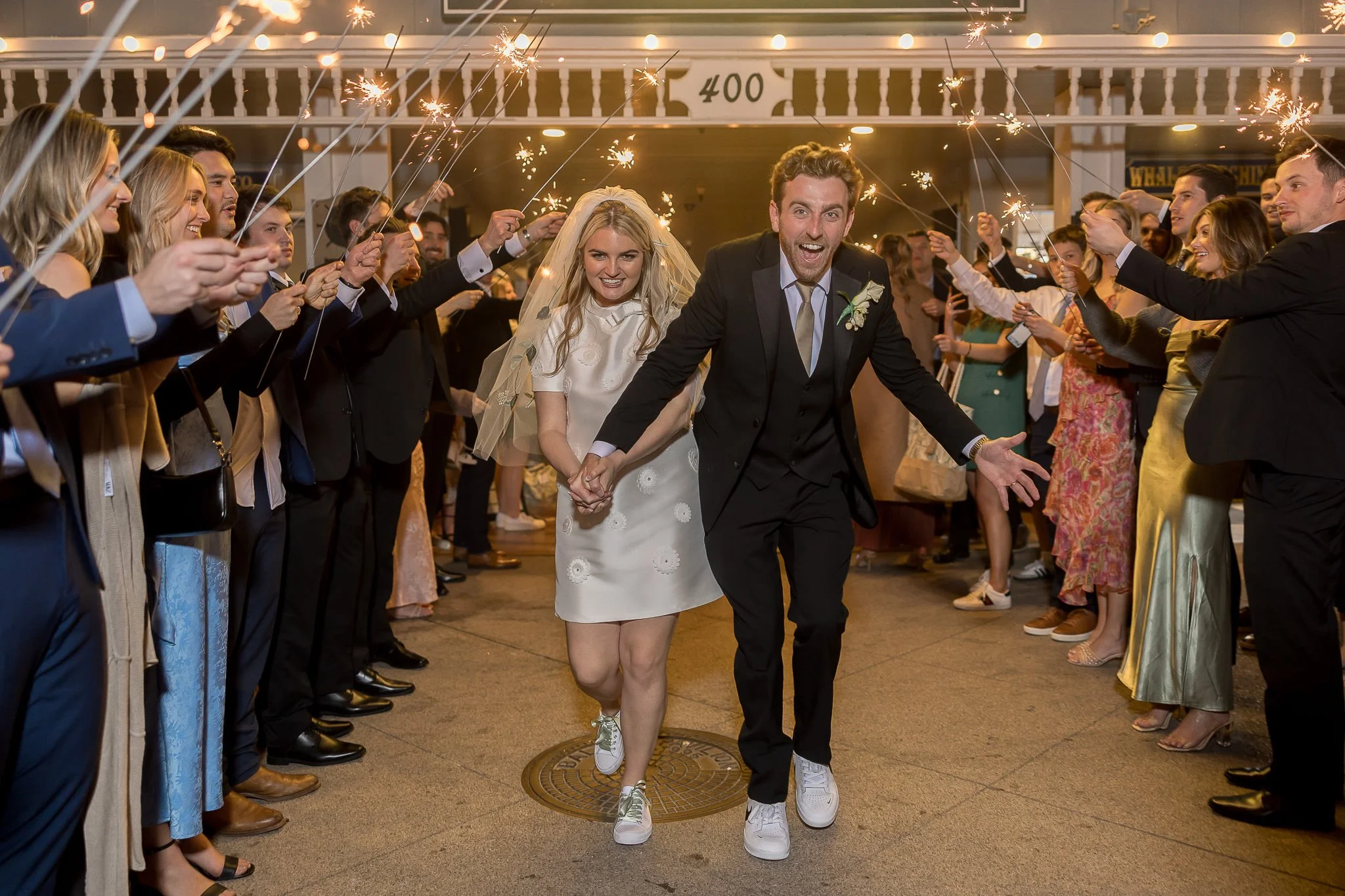
Timing the exit:
Announce the exit 5-10 minutes in advance
Station someone to light sparklers/distribute ribbons before the couple emerges
Have a clear path defined (where guests stand, where couple walks)
Coordinate with photographer/videographer on positioning
Common exit mistakes we've observed:
Attempting exits when half the guests have already left (looks sparse in photos)
No one designated to light sparklers (chaos ensues)
Couple walks too fast (exit lasts 10 seconds instead of a moment)
Insufficient space for a proper tunnel formation
Departure Details: The Final Touchpoint
Small details at the end create lasting impressions.
Late-night snack or treat: Give guests something to take as they leave:
Boxed cookies or mini pies
Donut wall with take-home bags
Coffee and pastries station
Personalized treat bags
This serves two purposes: guests who didn't eat much at dinner get food (preventing drunk driving), and everyone leaves with a tangible reminder of your celebration.
Favor table at exit: Rather than placing favors at each seat (where they get forgotten or left behind), station them at the exit point. Guests are more likely to take favors when they're actively leaving and have "just one more thing" to grab.
At one Montage Laguna Beach wedding, the couple created a "snack for the road" station with personalized bags of local jerky, chocolates, and a mini bottle of wine. Guests raved about it because it solved the problem of leaving hungry after dancing.
Guest Logistics: The Final Impression
Your guests' experience ends when they're safely back to their cars or accommodations—not when they walk out your venue door.
Parking & transportation planning:
If valet, ensure adequate staff for the exit rush (not a 30-minute wait)
If self-parking, ensure pathway lighting back to the lot
Consider shuttle service to nearby hotels
Provide Uber/Lyft pickup zone information
For guests who drove, make it easy to call a ride
At Monarch Beach Resort, couples often arrange shuttle service to nearby Newport Beach hotels—it eliminates parking concerns, allows guests to drink freely, and ensures everyone gets home safely.
The final goodbye: Whether you're doing a receiving line, a grand exit, or a more casual departure, make sure guests know you appreciated their presence. A simple "Thank you so much for being here" as guests leave creates warmth.
Some couples station themselves near the exit for the final 30 minutes, naturally saying goodbye to guests as they leave. Others do a formal exit moment. Either works—just don't disappear without acknowledgment.
Bringing It All Together: The Pro-Wedding Formula in Action
The difference between a good wedding and an unforgettable one isn't about the budget—it's about intention.
The Pro-Wedding Formula ensures:
Arrival: Guests feel welcomed, comfortable, and immediately engaged
Experience: Guests are physically comfortable, emotionally connected, and actively participating
Exit: Guests leave with a clear, memorable final moment and positive lasting impression
When we photograph and film weddings across Orange County—from intimate celebrations to grand coastal affairs—the ones that stand out aren't always the ones with the biggest budgets. They're the ones where couples thought through every touchpoint of their guests' experience.
Whether you're planning a Pelican Hill celebration or a private estate wedding, these principles remain constant. Focus on how your guests feel from arrival to exit, and everything else falls into place.
For more guidance on planning your Orange County wedding:
Explore our Ultimate Venue Guide for questions to ask before booking
Understand what affects wedding photography costs and where to invest
Learn the difference between videography and content creation for capturing your day
Planning an Orange County wedding and want a team that understands the guest experience formula? We specialize in documentary wedding photography and videography that captures not just what your wedding looked like, but how it felt—from the first guest arrival to your final sparkler-lit send-off.
Inquire here to check our availability and begin the journey toward a wedding that is beautifully captured—and deeply felt.
Interested in collaborating with One Story Weddings for your Wedding?