I Hate Being Photographed: How We Make Camera-Shy Couples Look Natural in Wedding Photos
I Hate Being Photographed: How We Make Camera-Shy Couples Look Natural in Wedding Photos
You love the idea of beautiful wedding portraits. You want those stunning sunset images at your wedding venue- the romantic moments you'll frame and hang in your home for decades.
But the thought of standing in front of a camera for 30 minutes makes you want to crawl out of your skin.
"I'm going to look so awkward." "I never know what to do with my hands." "What if I look fat in all the photos?" "We're just not photogenic people."
We hear this from at least half the couples who contact us. Here's what we tell them: being camera-shy doesn't mean your wedding photos will look stiff or uncomfortable. It means you need photographers who know how to work with you, not against you.
At One Story Weddings, we've spent years perfecting techniques that help camera-shy couples look completely natural in their portraits. Not because we're hoping you'll suddenly become models, but because we've learned exactly how to guide you in a way that doesn't feel like "posing."
Here's the honest truth about camera shyness and how we handle it.
Why You Feel Awkward (And Why That's Completely Normal)
Camera shyness isn't about being "unphotogenic." It's about self-consciousness becoming amplified when you know you're being watched and evaluated.
When someone points a camera at you and says "smile," your brain does three things simultaneously:
Tries to smile on command (which feels forced and looks fake)
Worries about how you look (which creates visible tension)
Becomes hyperaware of your body (which makes every movement feel awkward)
This is why traditional "posing" fails for camera-shy people. The more you think about the camera, the worse it gets. Your shoulders tense up. Your smile freezes. Your hands feel like foreign objects you don't know how to control.
Add in specific insecurities - worries about double chins, body shape, how your smile looks, whether your eyes are doing something weird - and the anxiety compounds.
Our entire approach is designed to reverse this cycle: get you thinking about anything except the camera and your perceived flaws.
The Real Problem Isn't You—It's Bad Direction
Here's what most people don't realize: those "awkward" engagement photos you've seen on social media? The stiff wedding portraits where couples look uncomfortable?
That's not because the couples were camera-shy. It's because the photographer didn't know how to direct them properly.
Bad direction sounds like this:
"Just stand there and smile"
"Look natural"
"Tilt your head that way"
"Put your hand... no, the other hand... higher... no, lower"
"Just relax"
Long, awkward silences while they adjust settings
This type of direction makes camera shyness WORSE because:
It gives you nothing to focus on except being photographed
Vague commands like "look natural" are impossible to execute
Micro-adjustments make you hyperaware of every body part
Silence amplifies self-consciousness
You're left wondering "Am I doing this right?"
Good direction sounds completely different:
"Walk together and share your favorite memory from today."
"Pull him close and whisper something that makes him laugh"
"Dance like you're alone in your living room"
"Groom, wrap your arms around her from behind and whisper what you thought when you first saw her today."
Constant conversation, positive reinforcement, and energy
Good direction keeps you moving and thinking about something other than the camera. Your brain can't simultaneously worry about how you look AND focus on a meaningful conversation with your partner.
How We Give Direction That Doesn't Feel Like Posing
At One Story Weddings, we don't ask you to "pose." We give you actions, prompts, and movements that create natural moments we can capture.
The Movement Technique: Why We Keep You Moving
Stiff photos happen when you're standing still, thinking about the camera, wondering what your face is doing.
Movement eliminates all of that. When you're in motion, your body naturally relaxes. Your expression becomes genuine because you're concentrating on the action, not the image.
Here's what this actually looks like during your portrait session:
Instead of: "Stand here and smile at the camera."
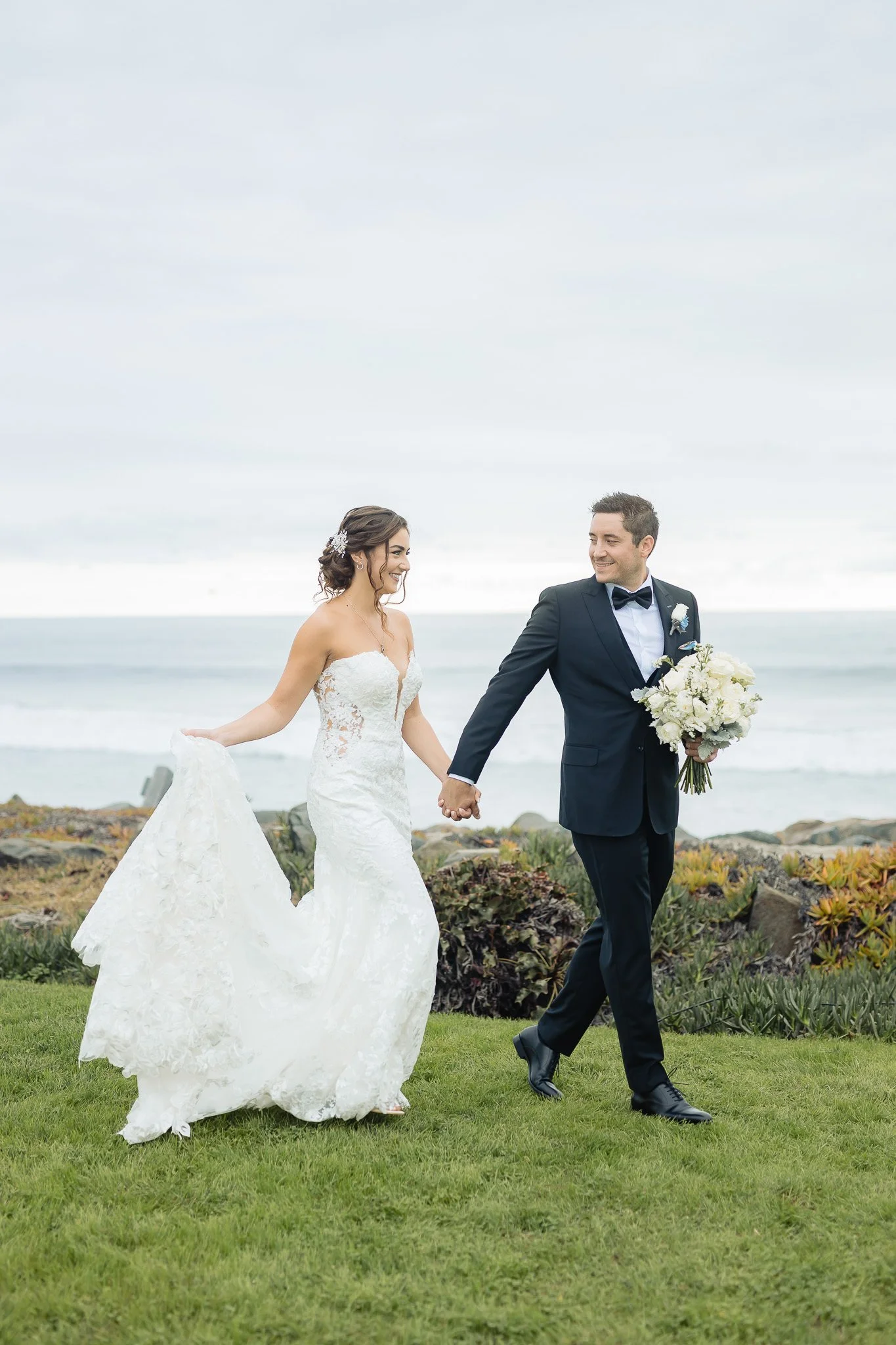
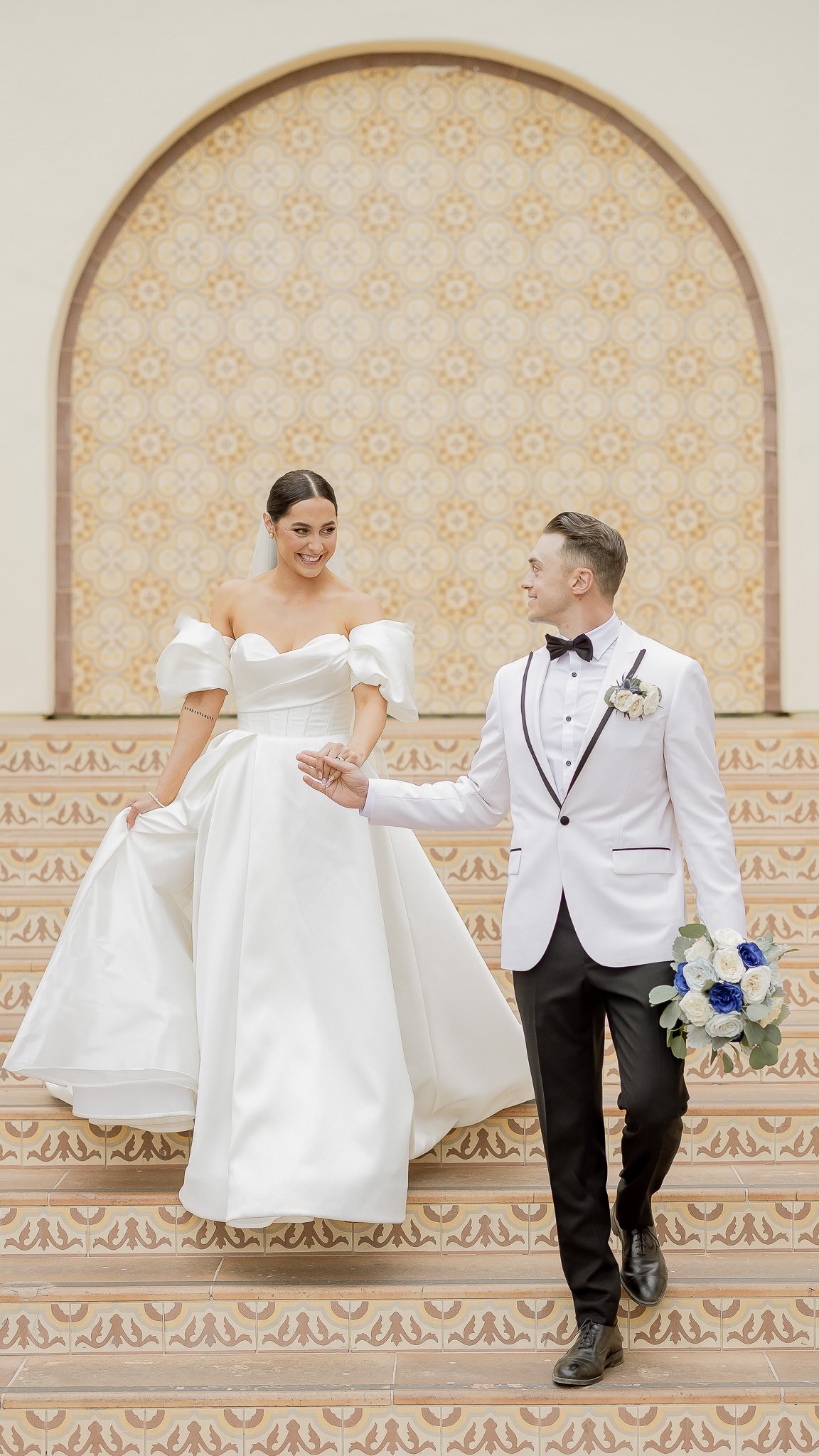
We say: "Walk toward me like you're heading to your favorite coffee shop. Now tell him about the moment you knew you'd marry him."
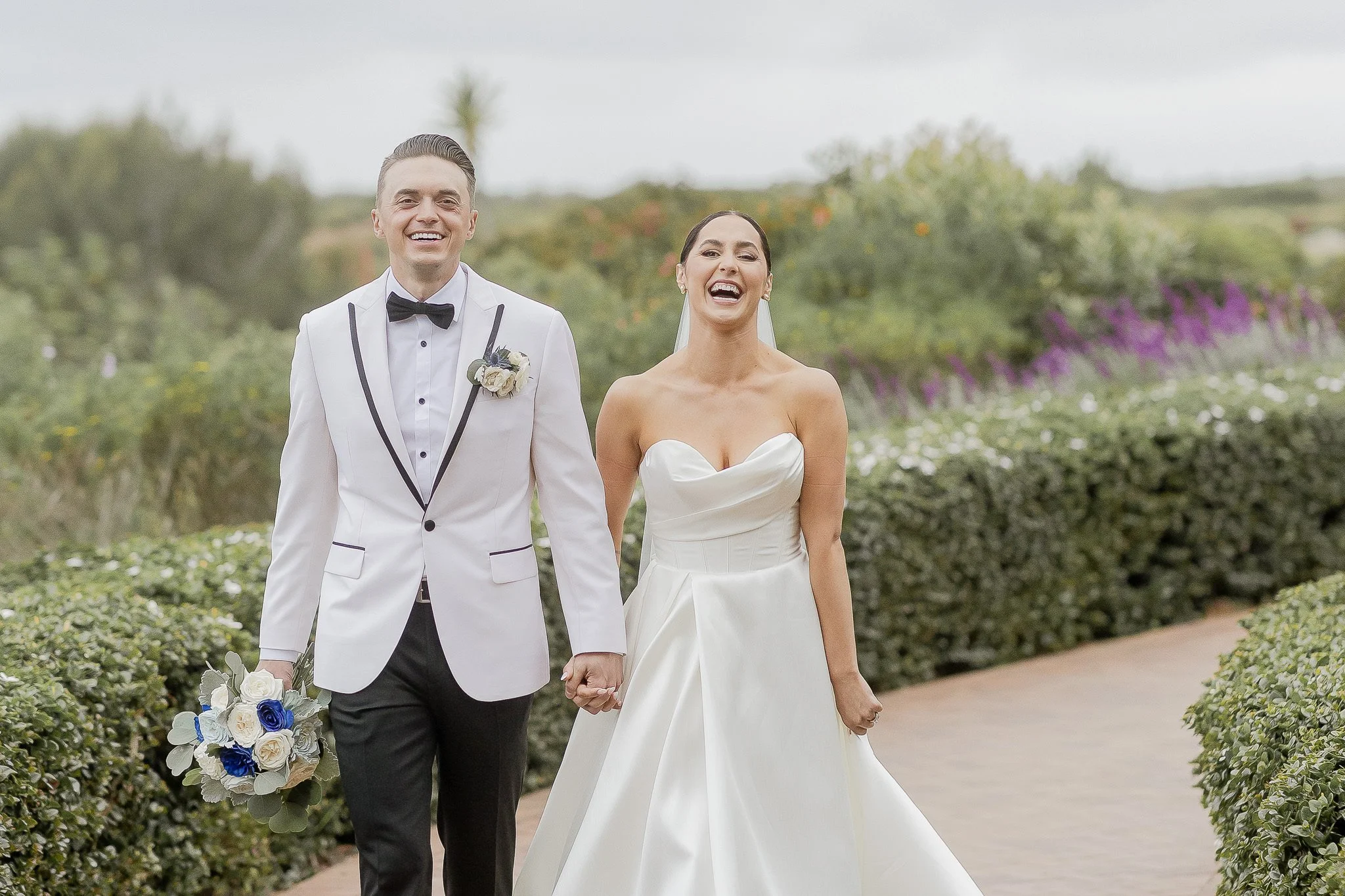
You're focused on walking (natural movement) and talking about something emotional (genuine expression). The camera disappears. We're capturing you mid-stride, mid-laugh, completely natural.
Other movement-based directions we use:
"Spin her, then pull her close and don't let go."
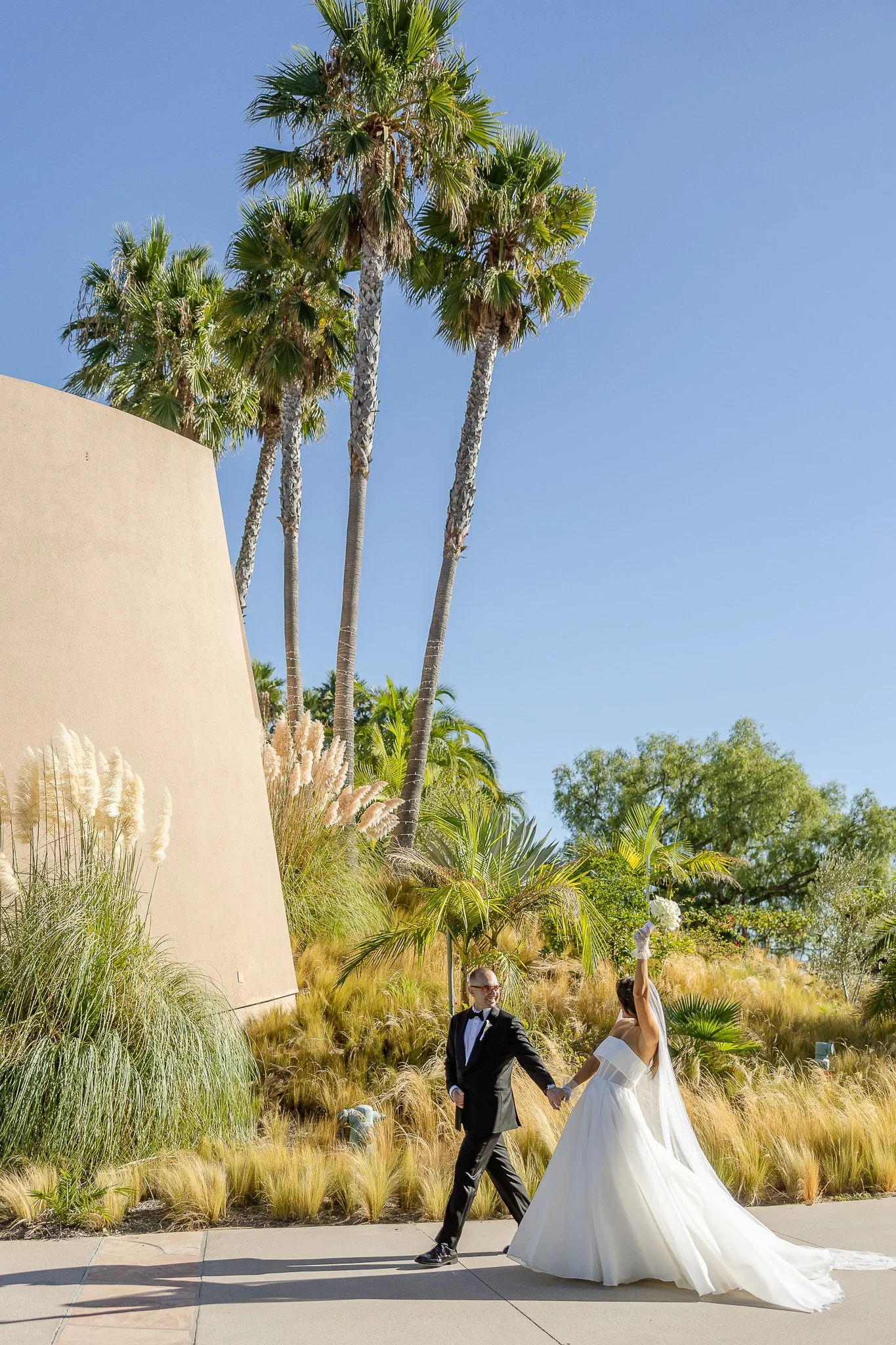
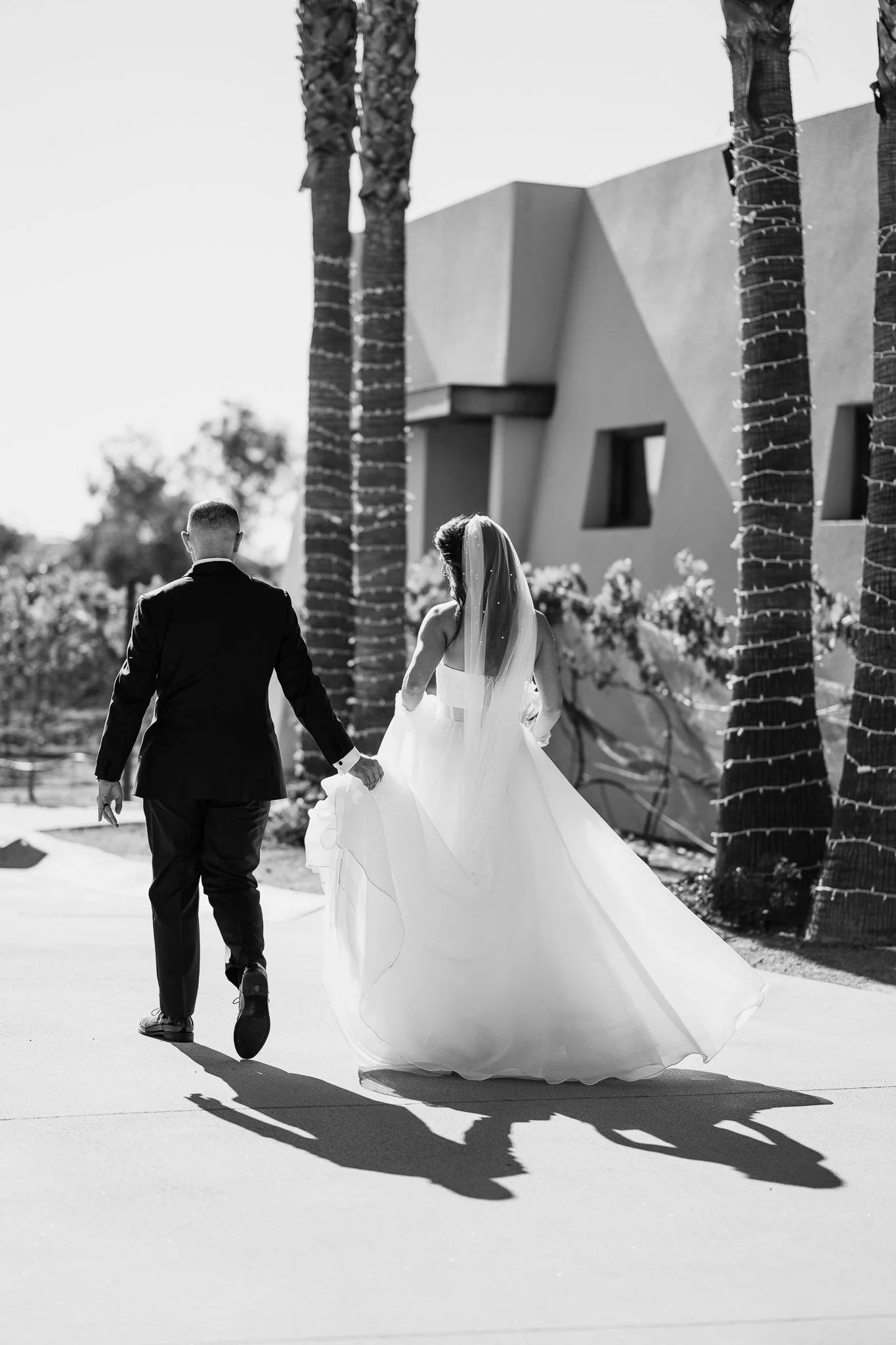
"Walk away from me holding hands, then look back at each other when I call your name."
"Sway together like you're dancing at your wedding - because you basically are."
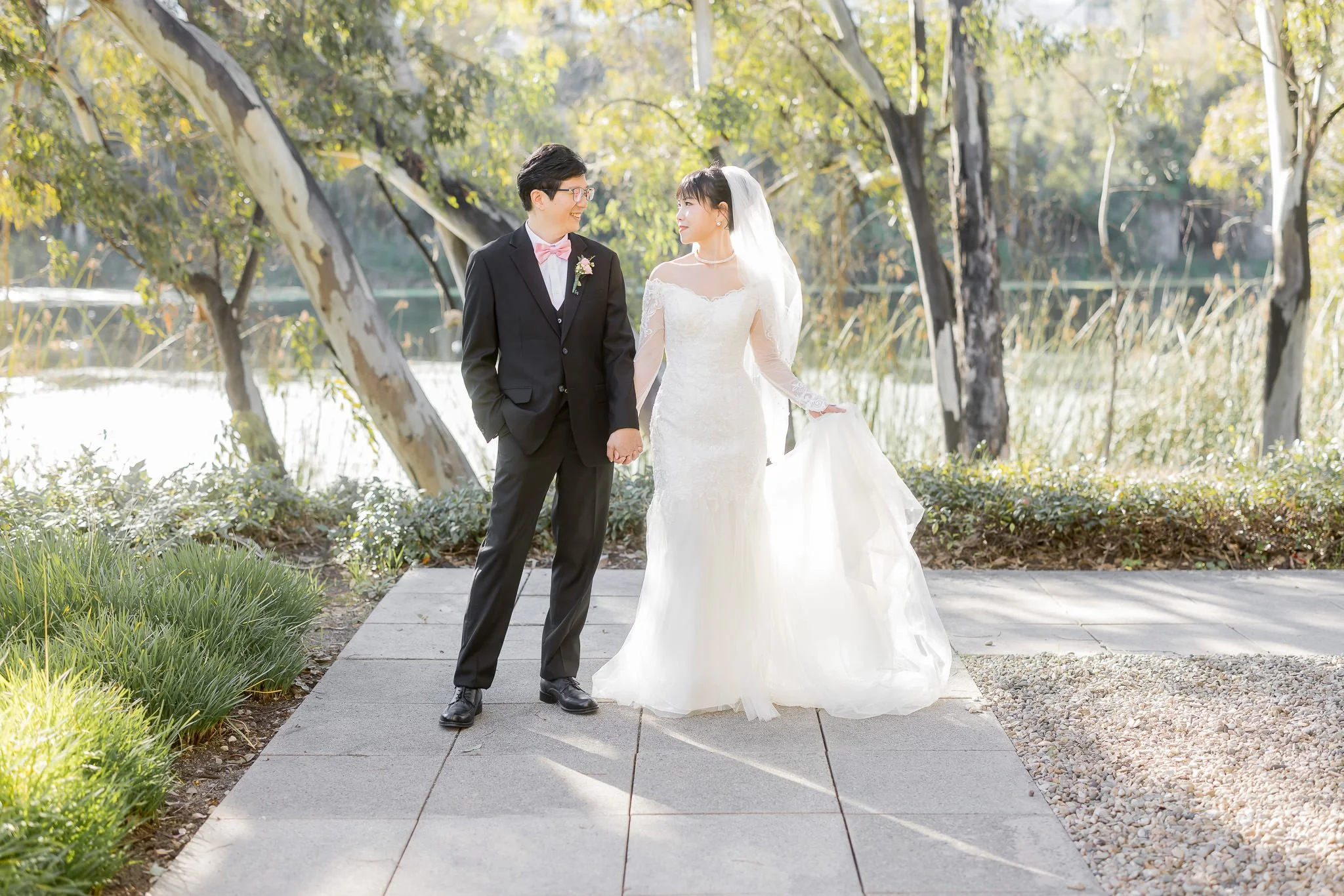
"Walk down this path and just talk about what you're most excited about for your honeymoon."
"Twirl your dress, then laugh about how ridiculous that felt."
The result: Images that look editorial and intentional, but felt completely natural to create because you were doing something specific, not "posing."
The Connection Focus: Getting You Out of Your Head
The ultimate trick to overcoming camera shyness: focus entirely on your partner, not the camera.
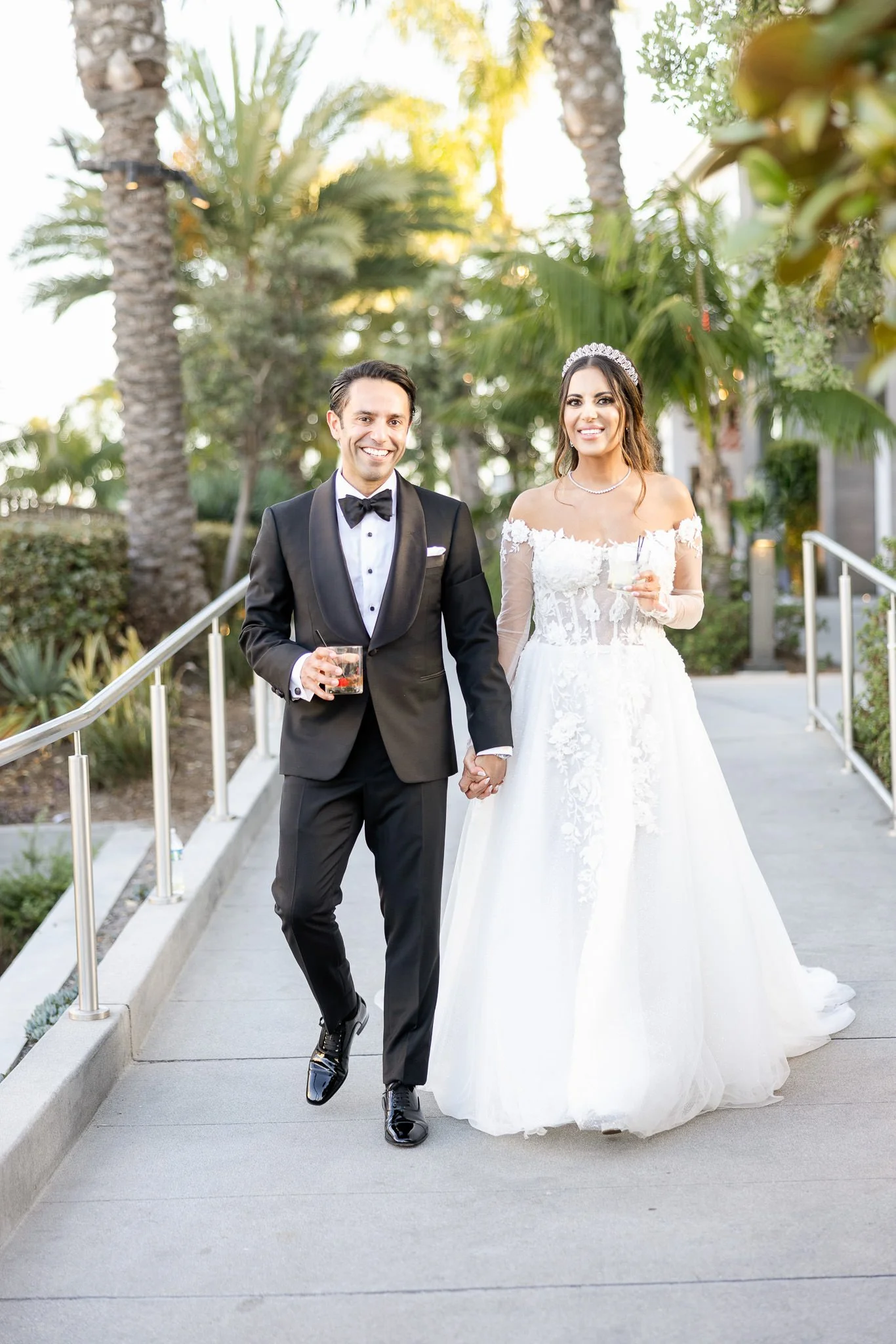
Most of our directions involve looking at each other, not at us. This creates a private world between the two of you where the photographer becomes invisible.
Directions that eliminate camera awareness:
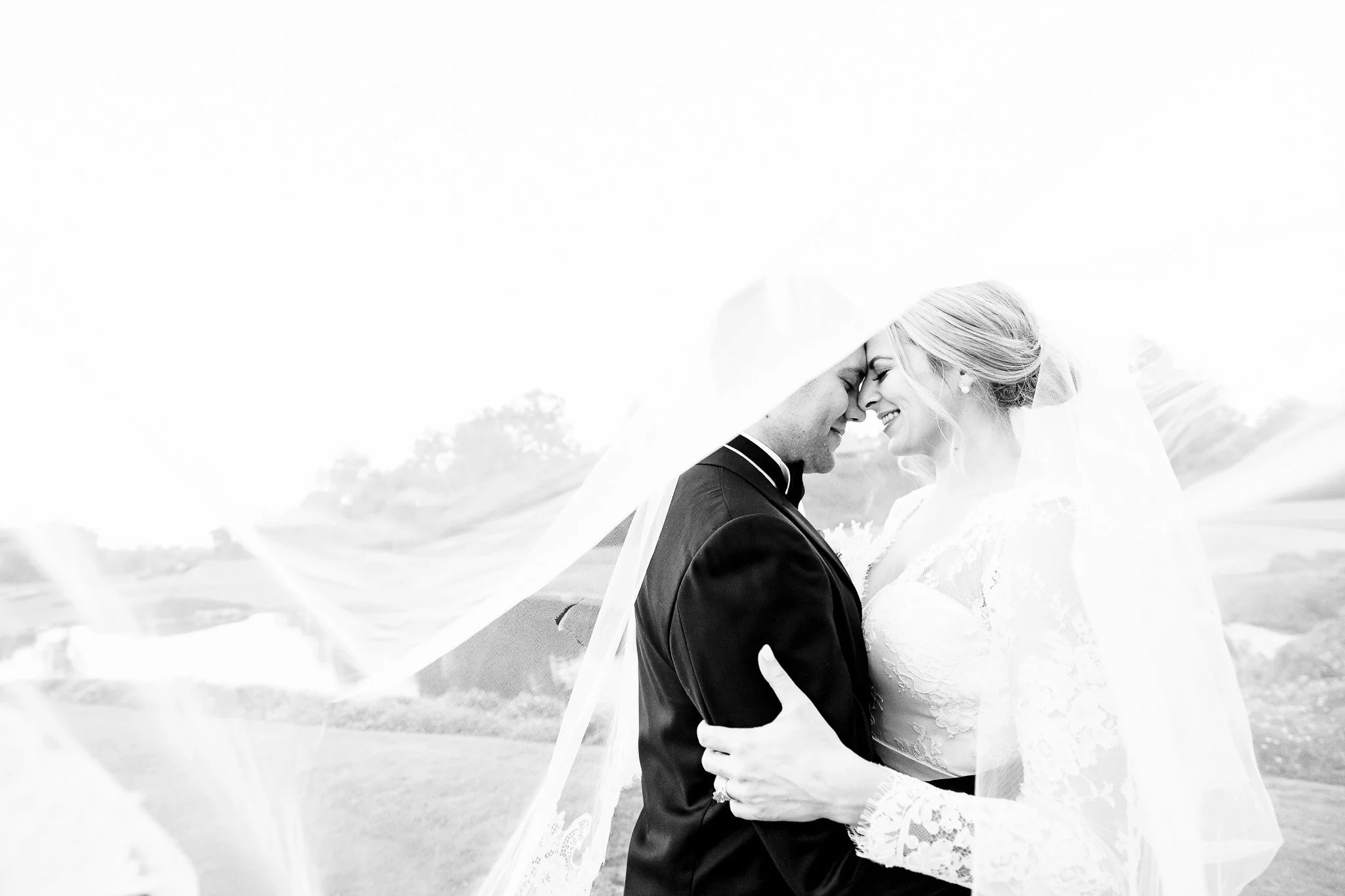
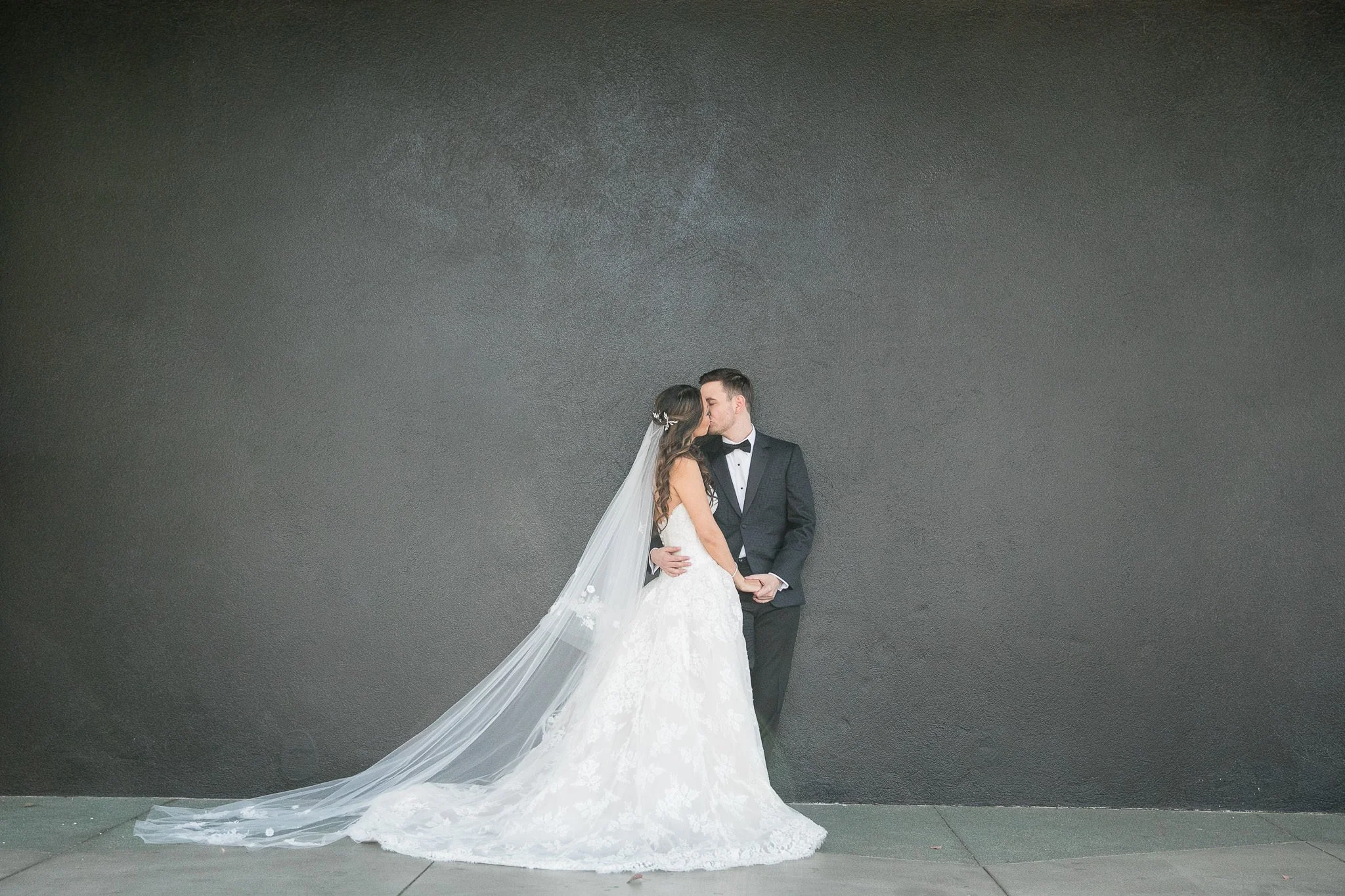
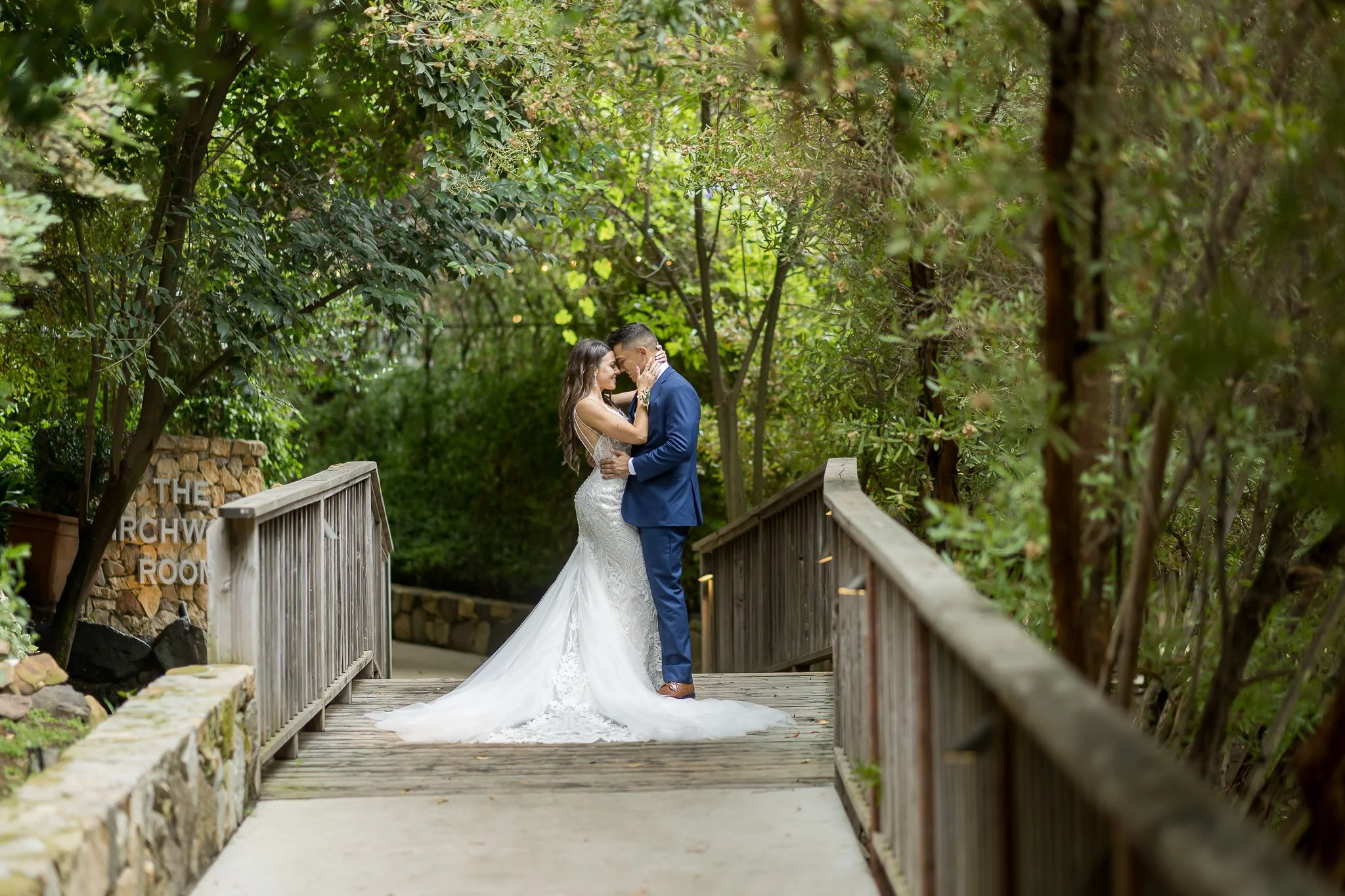
"Put your foreheads together and close your eyes. Just breathe together for a second."
"Whisper something to him that you don't want me to hear."
"Tell her three things you love about her. I'm going to capture her reaction, not you talking."
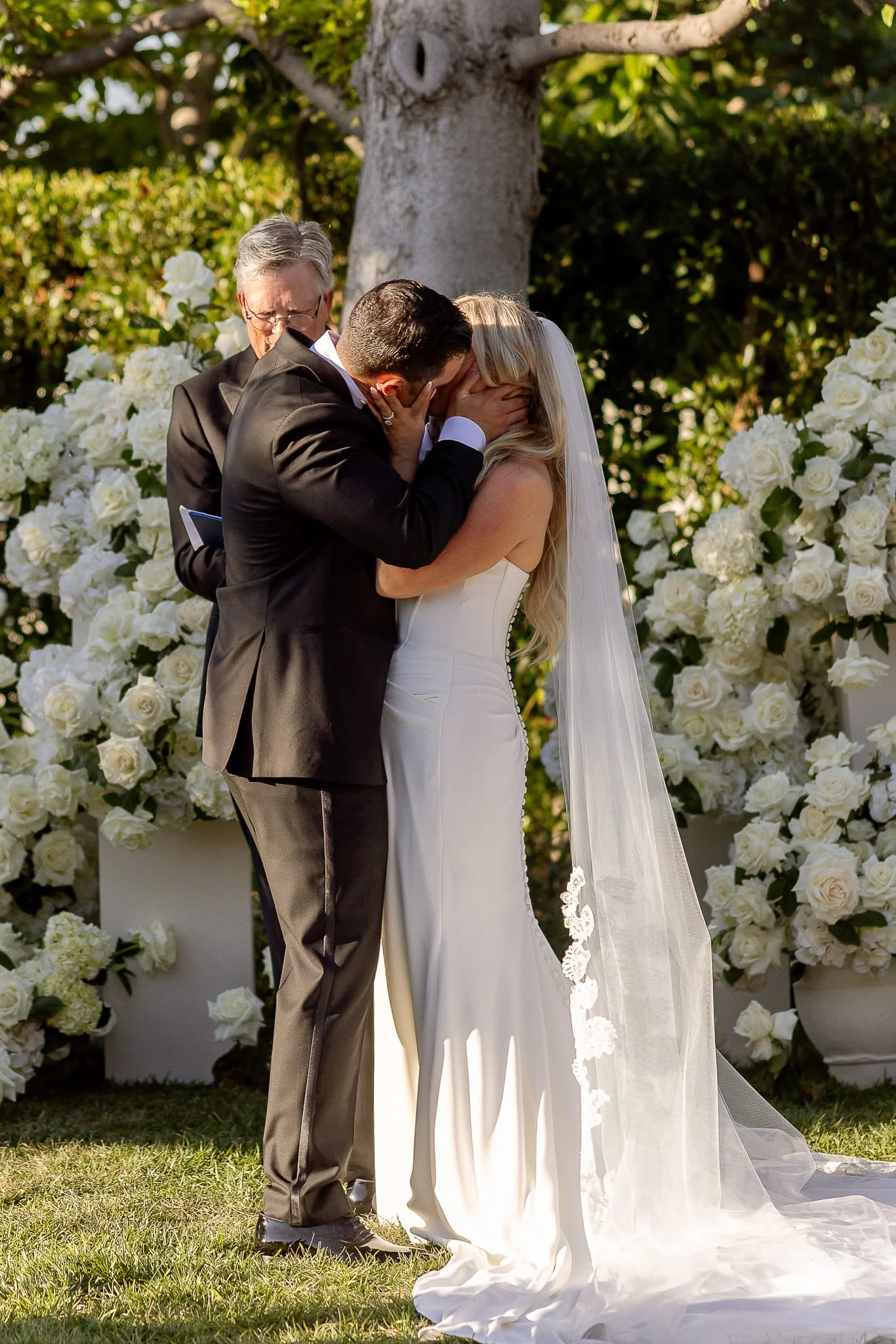
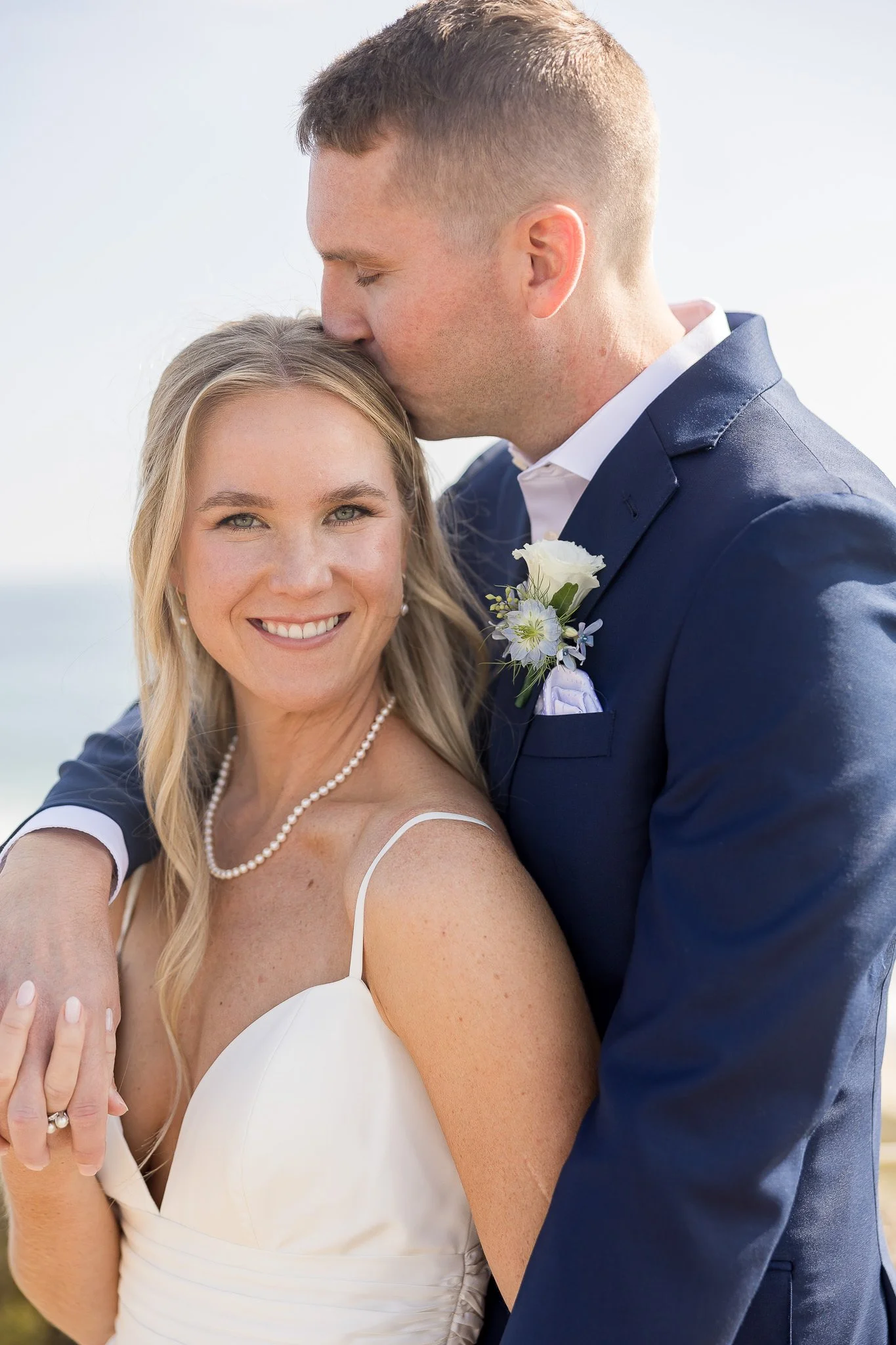
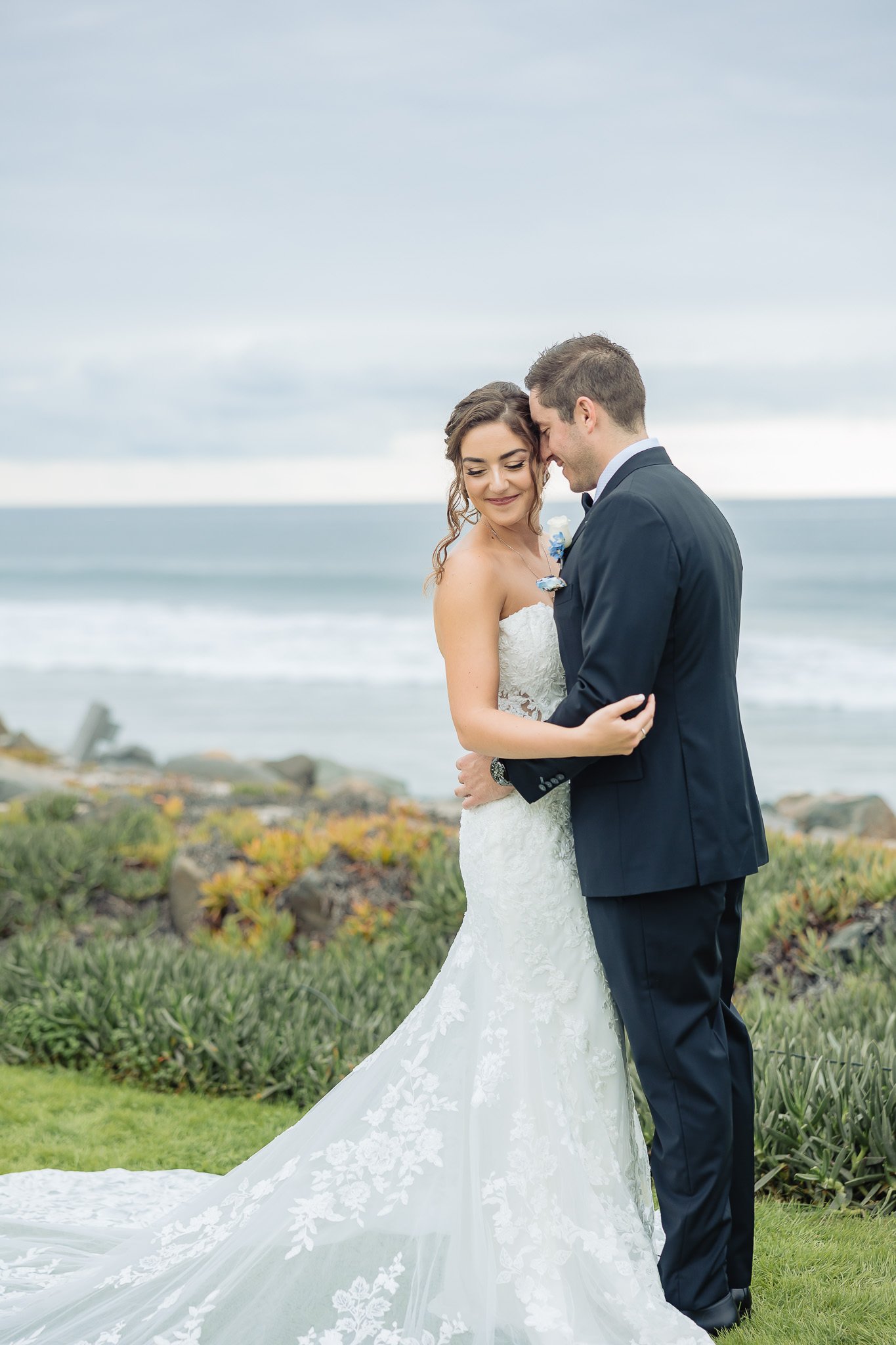
"Hold her face in your hands and just look at her like she's the only person here."
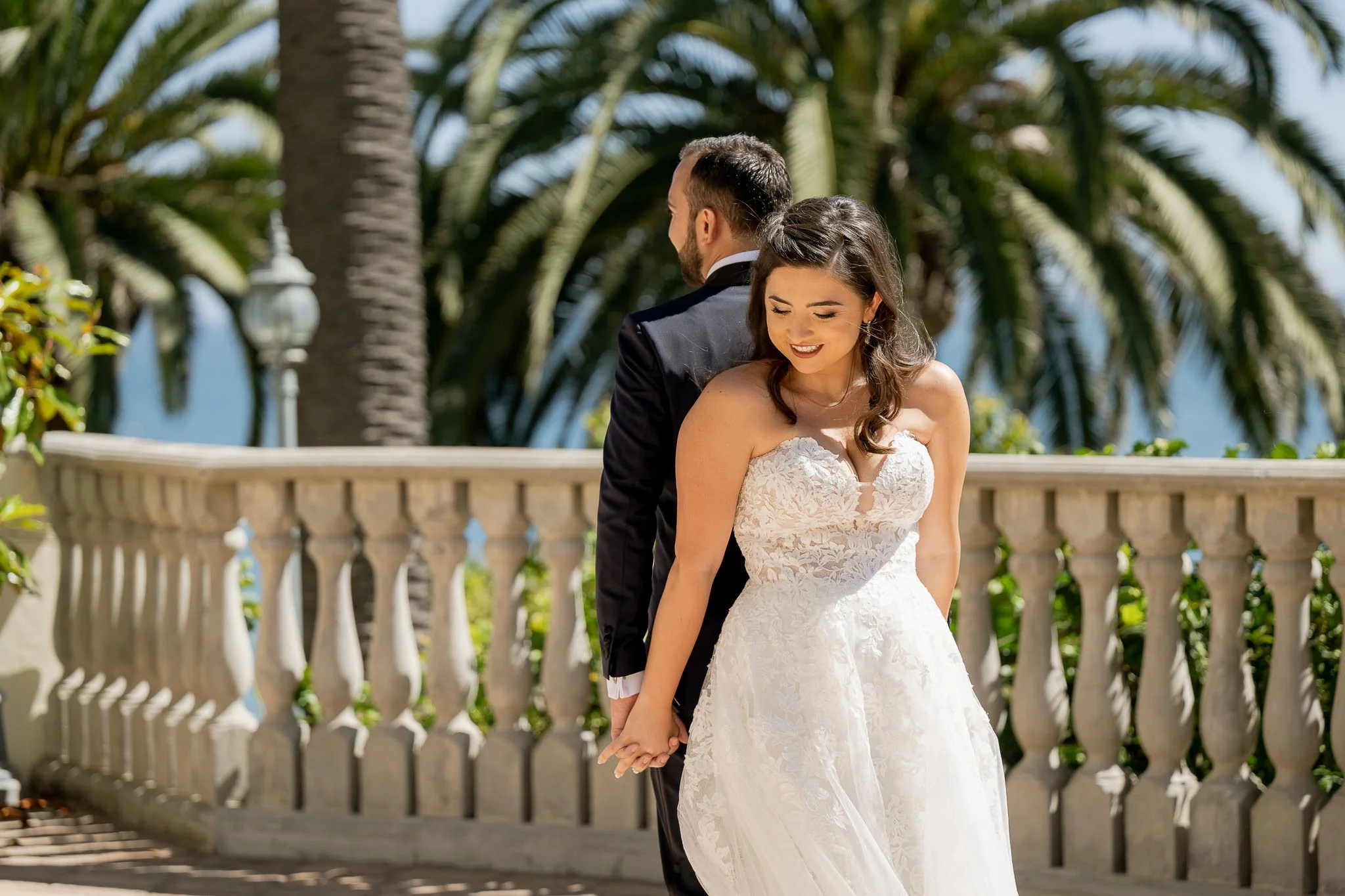
"Stand back-to-back, close your eyes, and think about what you're most grateful for today."
Why this works:
When your eyes are closed or you're focused on your partner, you literally can't see the camera. You stop worrying about your expression, your angle, how you look. You're just experiencing a genuine moment with the person you love.
These often become the images couples treasure most—not because of perfect lighting or composition, but because the emotion is completely real.
What to Do With Your Hands (The #2 Camera-Shy Concern)
After "I hate my smile," the most common anxiety is: "I never know what to do with my hands."
Hands hanging awkwardly at your sides, not knowing where to put them, feeling like they're giant weird appendages—this is universal.
Our solution: Give your hands a job.
We don't say: "Put your hands... somewhere."
We say:
"Hold her face gently"
"Put your hands in your pockets - one or both, whatever feels comfortable"
"Rest your hand on his chest"
"Hold hands but interlock your fingers"
"Wrap your arms around him from behind"
When your hands have a specific purpose, they stop feeling awkward. You're not thinking "what are my hands doing?" - you're thinking about the action.
The walking technique for hands:
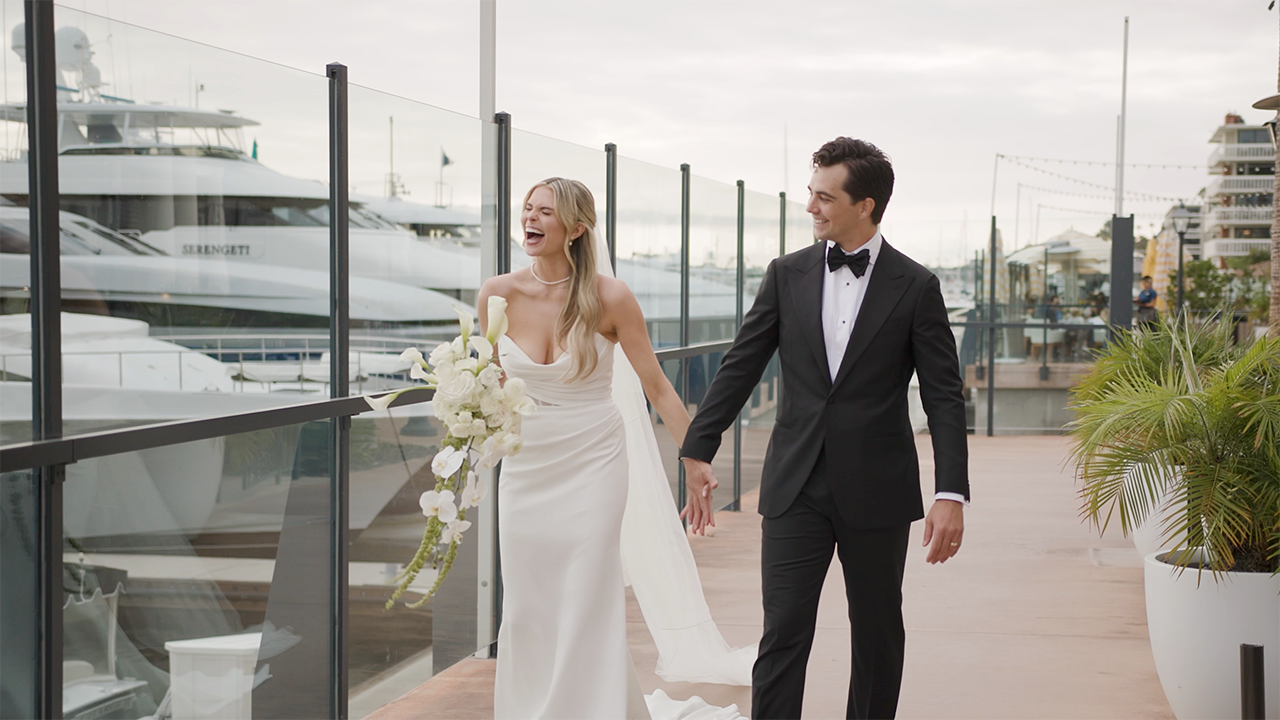
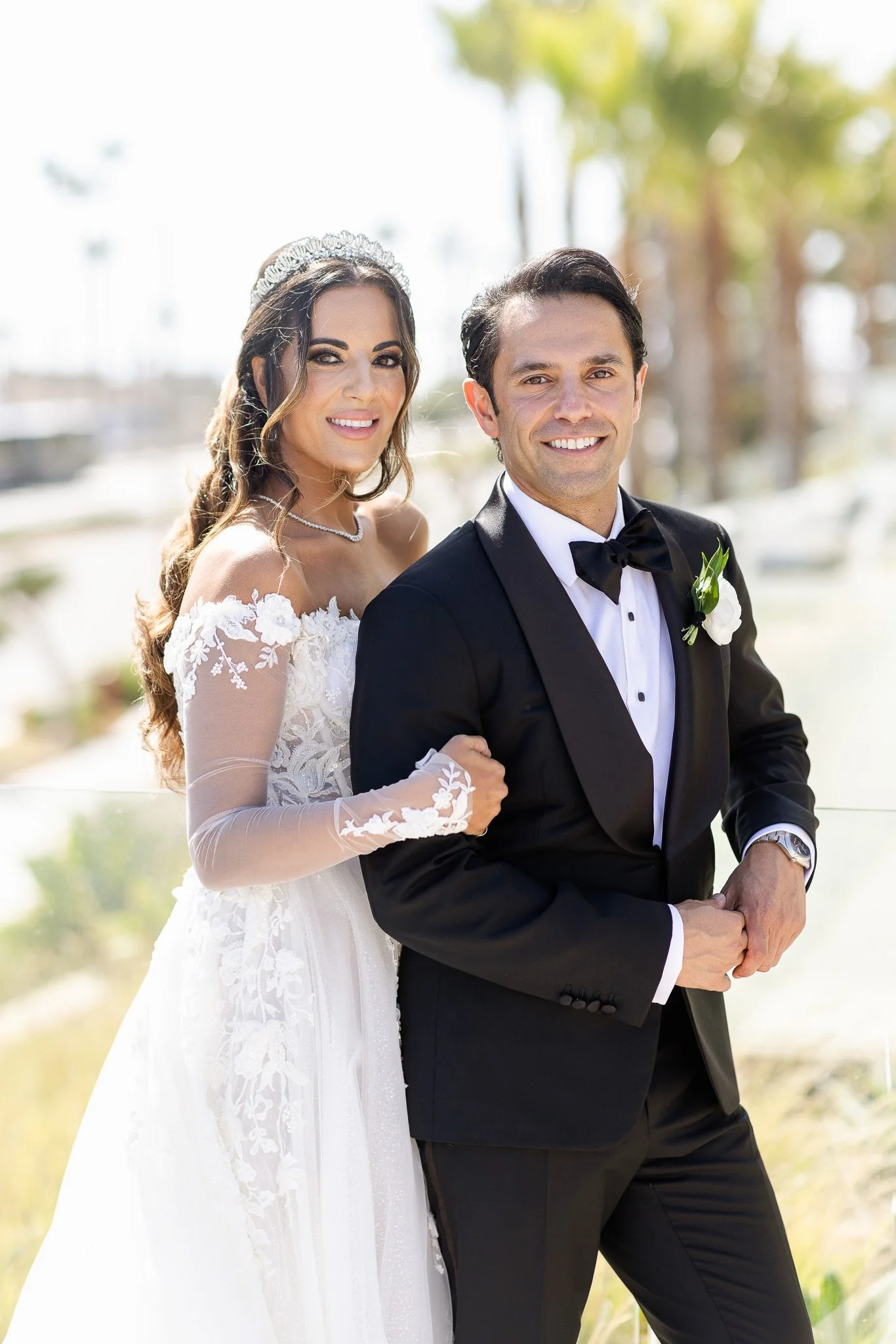
The absolute easiest hand solution? Walk while holding hands. Walking gives your entire body purpose, and hand-holding happens naturally. We use walking in at least 50% of our portraits for exactly this reason.
How to Look at Each Other Without It Feeling Weird
"Look at each other" is one of the most common photographer requests - and one of the most uncomfortable for camera-shy couples.
Extended eye contact with your partner while someone photographs you feels intensely vulnerable and strange. You want to look away, laugh nervously, or say something to break the tension.
Here's how we make it natural:
We give you something to think about while looking at each other:
"Look at each other and think about your first kiss."
"Make eye contact and try to make each other laugh without saying anything."
"Look at him like he just said the most ridiculous thing you've ever heard."
"Look at her and think about what you're going to say in your vows."
We keep it brief:
We're not asking you to stare at each other for minutes. We need maybe 10 seconds to capture the moment. It's long enough to feel meaningful but short enough that it doesn't become uncomfortable.
We break it up with action:
"Look at each other... now walk forward... now stop and look again... now laugh and keep walking."
The breaks prevent that "this is lasting forever" feeling.
We acknowledge when nervous laughter happens:
If you start giggling because it feels weird, we don't make you suppress it. We say "Perfect, keep laughing - that's beautiful." Nervous laughter often produces the most genuine, joyful images.
Handling Physical Insecurities and Body Concerns
Let's address the thing most camera-shy people are thinking but don't always say out loud: physical insecurities are often at the root of camera anxiety.
"I hate how I look from this angle." "I'm worried about looking heavy." "My double chin always shows up in photos." "I don't like my smile."
These concerns are real, valid, and incredibly common. Here's how we handle them.
Angles and Positioning That Flatter Everyone
Professional photographers understand angles and body positioning in ways that make everyone look their best.
For minimizing double chin:
We position you so you're slightly looking down toward the camera, not up (looking down extends the neck)
We ask you to push your forehead forward slightly (sounds weird, works perfectly)
We photograph from slightly above, not below
We use specific lighting that creates definition
For body-conscious couples:
We angle your body at 45 degrees to the camera, not straight-on (instantly slimming)
We position the person more body-conscious behind their partner or at an angle
We use foreground elements (flowers, partner's body) to partially obscure if requested
We prioritize upper body and face shots, not full-length when you're anxious
For unflattering sides:
We ask early which side you prefer and we honor it
We position you accordingly for every shot
We don't make you feel weird for having a preference - everyone does
Can You Edit Physical Insecurities?
This is a question couples think but often don't ask: will you photoshop me to look thinner/different?
Here's the honest answer:
We do natural, subtle editing that enhances what's already there:
Smoothing skin
Softening harsh shadows
Removing temporary blemishes
Minor slimming in natural, unnoticeable ways
What we don't do:
Dramatic body reshaping (looks fake and obvious)
Face-altering that changes your features
Anything that makes you unrecognizable
Why?
Because in ten years, you want to look at your photos and see yourself—the real you on your wedding day. Not a heavily edited version that doesn't reflect reality.
The better solution: Angles, positioning, and lighting during the shoot. This creates naturally flattering images that don't require dramatic editing.
How to communicate concerns:
During our consultation, tell us if you have specific concerns. "I'm self-conscious about my arms" or "I don't love my profile" helps us plan accordingly. We won't make you feel weird about it—we'll just adapt our approach.
What If You're Emotional During Photos?
Camera-shy people often have an additional worry: "What if I cry? What if I get emotional and my makeup runs and I look terrible?"
Here's the truth about emotion in photos:
The images where you're teary or emotional are often the ones you'll treasure most. They're real, vulnerable, and capture the genuine significance of your wedding day.
How we handle tears:
We don't stop shooting (these are often the most beautiful moments)
We give you time to compose yourself if you want it
We help with makeup touch-ups or have your planner assist
We capture the emotion authentically, not dramatically
Nervous laughter and emotion:
Some people laugh when they're nervous or emotional. This is completely normal and often creates the most joyful, genuine images in your gallery.
If you start laughing during a serious moment, we don't try to make you stop. We capture the laughter because it's a real part of your experience.
When One Person Is Camera-Shy and One Isn't
This is incredibly common: one partner is naturally comfortable on camera while the other would rather be anywhere else.
The good news: When one person is relaxed, it actually helps the other person relax too.
How we handle mismatched comfort levels:
We focus the camera-shy partner on their comfortable partner:
If you're the camera-shy one, we give you directions that focus your attention entirely on your partner. "Look at him and tell him why you said yes." This lets you feed off their comfortable energy.
We give individual coaching:
The camera-shy partner often needs more specific direction (concrete actions to do), while the comfortable partner can handle looser guidance.
We start with the comfortable partner leading:
"He's going to spin you, then pull you close" - the comfortable partner initiates the action, and you just respond naturally.
We're patient with pace differences:
If one person needs a 30-second breather and the other doesn't, that's fine. We adapt our pacing to the more anxious partner while keeping the comfortable partner engaged.
We balance attention:
We're conscious not to focus too much energy on the camera-shy partner in a way that makes them self-conscious. Sometimes the best approach is just backing off and letting things unfold naturally.
What If You Don't Feel "In Love" on Camera?
Another unspoken anxiety: "We're not super affectionate people. What if we don't look 'in love' in our photos?"
This concern usually comes from couples who:
Aren't big on PDA
Show affection quietly rather than dramatically
Feel awkward being romantic in front of others
Worry they don't photograph as "couple-y" as other couples
Here's the truth:
You don't have to be a demonstratively affectionate couple to create beautiful, loving images. Intimacy and connection show up in subtle ways that photography captures beautifully.
How we create connection for non-touchy couples:
We focus on small, natural gestures:
Holding hands
Standing close with shoulders touching
Simple hand on the back or arm
Gentle forehead touches (less intense than kissing)
Looking at each other from a distance
We use conversation to create genuine expression:
"Tell each other one thing you're looking forward to about being married."
These prompts create real emotion and connection without requiring dramatic physical affection.
We never force intimacy levels you're uncomfortable with:
If you're not big on kissing in front of others, we don't make you do dramatic kiss poses. A gentle kiss on the forehead or cheek feels more natural and often photographs more beautifully anyway.
Quiet connection is just as powerful:
Some of the most powerful couple portraits are simply two people standing together, looking at each other, with subtle smiles. The connection shows in the eyes, the body language, the proximity—not necessarily in dramatic gestures.
The Engagement Session: Your Camera-Shy Secret Weapon
If you're camera-shy, the engagement session isn't optional—it's essential. Here's why it's worth the investment specifically for anxious couples.
It's Low-Stakes Practice
Your wedding day has high emotional intensity, tight timelines, and a lot of pressure. The engagement session is relaxed, casual, with zero time constraints.
You can laugh when something feels weird. We can try different approaches. There's no pressure to "get it right" because we have time to experiment.
What this looks like:
If a direction doesn't work, we just try something else. "That felt awkward? Okay, let's try this instead." This experimentation is impossible on a wedding day when we have 25 minutes for portraits.
You Learn Our Language
When we say "forehead rest" or "whisper walk" during your wedding portraits, you'll already know exactly what we mean.
On your wedding day, we can work twice as fast because we've already established our communication rhythm. We don't waste time explaining directions—you just flow through them naturally.
We Learn Your Angles, Expressions, and Comfort Zones
Everyone has:
Sides they prefer
Expressions that feel natural
Movements that look flattering
Comfort levels with different types of direction
The engagement session lets us discover all of this without the time constraints of a wedding day.
What we learn:
Which directions make you laugh vs. tense up
How much guidance you need vs. want
Your physical comfort levels (how close you like to stand, whether you prefer movement or stillness)
Which angles are most flattering
How you respond to different types of prompts
By your wedding day, we know how to work with you specifically—not just camera-shy couples in general, but you as individuals.
You See Proof That It Works
The biggest anxiety reducer for camera-shy couples? Seeing beautiful photos of themselves.
When you get your engagement gallery and realize "we actually look good—natural, comfortable, like ourselves," the wedding day portrait session becomes something you look forward to rather than dread.
This confidence shift is huge:
Couples who skip engagement sessions often spend their entire wedding portrait session wondering "Is this working? Do we look okay?"
Couples who did engagement sessions already know the answer is yes. They trust us, they trust the process, and they relax into it.
It Builds Trust
By your wedding day, we're not strangers with cameras—we're people you trust who've already proven we can make you look natural and feel comfortable.
This psychological shift changes everything. You're not thinking "I hope this photographer knows what they're doing." You know we do, because you've experienced it.
For camera-shy couples specifically:
We can't overstate how valuable this is. The engagement session removes 90% of the anxiety around wedding portraits because you've already been through the process once successfully.
Is the Cost Worth It for Camera-Shy Couples?
Honest answer: Absolutely yes.
Think of it this way: If skipping the engagement session saves you $500 but means your $5,000 wedding photography investment produces stiff, uncomfortable portraits because you never got comfortable with your photographer—was that $500 worth it?
The engagement session is insurance for camera-shy couples. It ensures your wedding day portraits will be natural, comfortable, and beautiful because you've already worked through the awkwardness in a low-pressure environment.
What Actually Happens During Your Portrait Session
Camera-shy couples often fear portrait sessions because they don't know what to expect. Let's walk through exactly what happens.
The First 60 Seconds (Anxiety Management)
The beginning of portrait time is when anxiety peaks. Here's exactly how we handle it:
We start with movement immediately:
No standing around wondering what to do. The moment we transition to portraits, we're already giving direction: "Let's start by walking this direction."
Movement gets your body relaxed immediately instead of letting tension build.
We acknowledge the weirdness:
"I know this feels strange for the first minute or two. That's completely normal. Just focus on each other and trust me—by the third shot, you'll forget I'm here."
Naming the discomfort actually reduces it. You're not wondering if we notice you're nervous—we've already acknowledged it and told you it's okay.
We show you images quickly:
After the first few shots, we turn the camera around: "Look how beautiful this already is."
Seeing proof that it's working melts anxiety immediately. You think "Oh, we don't look awkward. This is actually working."
We keep the energy up:
We're talking constantly, making conversation, telling you what we're seeing: "That laugh was perfect," "The way you just looked at him—gorgeous," "This light is incredible on you."
Positive reinforcement keeps nerves at bay. Silence amplifies anxiety.
We work fast:
By minute three, you're comfortable. By minute ten, you've forgotten we're photographing you.
The first 60 seconds are the hardest—we know that, and we design our approach specifically to get you past that initial discomfort as quickly as possible.
How Long Portrait Sessions Actually Take
For camera-shy couples, we typically plan for 20-30 minutes maximum for wedding day portraits, and 45-60 minutes for engagement sessions.
Why these timelines:
Longer sessions exhaust anxious couples. We've found that 25 focused, efficient minutes produces better results than an hour of dragging out the process.
What we accomplish in 25 minutes:
25-30 stunning couple portraits
Multiple locations/backgrounds
Variety of poses, angles, and moods
Time to try different approaches if something isn't working
How we work this efficiently:
We've already scouted the best light and locations
We know exactly what shots we're creating
We give clear, specific direction (no wandering around hoping something works)
We're experienced enough to work quickly without rushing you
Most camera-shy couples tell us afterward: "That went by so fast. It wasn't nearly as bad as I thought."
Can We Bring Someone for Moral Support?
This is a question some camera-shy couples ask but don't always voice: "Can we bring a friend or family member to our engagement session for support?"
The honest answer: It usually makes things worse, not better.
Why:
Having an audience (even a supportive one) increases self-consciousness. You're now aware of three people watching you instead of one, and you're thinking about how you look to your friend/parent, not just the photographer.
Additionally, well-meaning support people often:
Give directions that conflict with ours
Interrupt the flow with comments
Make jokes that distract from genuine moments
Create a "performance" dynamic instead of an intimate one
Exception:
If you have severe anxiety and genuinely need someone there for the first 10-15 minutes, we can work with that. But we ask that they step away for the remainder of the session.
Better approach:
Trust that we've worked with hundreds of camera-shy couples. We know how to make you comfortable without needing a third party present. The engagement session is your safe space to be awkward with us without an audience.
How to Look Relaxed When You Feel Tense
Physical tension is the visual manifestation of camera shyness. Even if you're smiling, tension shows in your shoulders, jaw, hands, and posture.
Why Tension Shows Up in Photos
When you're nervous, your body responds:
Shoulders creep up toward your ears
Jaw clenches
Hands ball into fists or hang stiffly
Breathing becomes shallow
Posture becomes rigid
All of this reads as "uncomfortable" in photos, even if your face is smiling.
Physical Tension Release Techniques We Use
Shoulder rolls:
Before we start shooting, we have you roll your shoulders back three times. This physically releases the tension that's built up.
Deep breathing:
"Take a deep breath in... now let it out and drop your shoulders."
This simple reset works remarkably well. Shallow breathing creates tension; deep breathing releases it.
Shake it out:
Literally shake out your hands and arms for a few seconds. It feels ridiculous, but it works. Physical movement releases physical tension.
The fake laugh:
We sometimes ask couples to fake laugh together for 10 seconds. It feels absurd, but forcing laughter actually makes you genuinely laugh at how ridiculous it is—and genuine laughter releases all tension.
Jaw Tension (The Hidden Tension Point)
Many people clench their jaw when nervous without realizing it. This creates a tense, unnatural look even if you're smiling.
Our cue:
"Let your jaw relax. Mouth slightly open, like you're about to say something."
This simple adjustment creates a natural, soft expression instead of a tense one.
The Relaxed Hand Test
If your hands are tense, everything else looks tense.
Quick check:
If your fingers are straight and rigid, you're holding tension. Relaxed hands have naturally curved fingers, not stiff ones.
Our fix:
We give your hands something to do (hold each other, touch your partner, rest in pockets) so they automatically relax.
What Makes Photos Look Awkward (And How We Avoid It)
You've seen those engagement photos that make you cringe. The couple looks stiff, uncomfortable, like they're checking boxes on a Pinterest board. Here's what causes that—and how we avoid it.
Awkward Photo Red Flags
Overly symmetrical poses:
When photographers position couples perfectly symmetrically (exactly the same height, perfectly centered, matching positions), it looks staged and unnatural.
Reality: Real couples don't stand with perfect symmetry. We embrace natural height differences, asymmetry, and organic positioning.
Static, held poses:
When couples are told to hold a specific position for multiple shots, tension builds and the pose looks increasingly stiff with each frame.
Reality: We shoot while you're moving into and out of positions, not holding them. The images between poses are often the best ones.
Forced expressions:
"Big smile! Bigger! Hold it!" creates those frozen, manic grins that look terrifying.
Reality: We create genuine expressions through prompts and conversation, not forced smiling.
Trendy poses that don't fit your personality:
If you're not playful people, asking you to do the "lift and spin" or "piggyback ride" creates images where you look uncomfortable because you ARE uncomfortable.
Reality: We adapt our direction to your personalities. Quiet couples get quiet, intimate moments. Playful couples get energetic, joyful moments.
Over-the-top romantic scenarios:
Kissing in a field of flowers while the wind machine blows your dress might look pretty, but if you're rolling your eyes internally, it shows.
Reality: We create moments that feel authentic to you, not Instagram trends.
The "Cheese" Factor
What makes engagement photos feel cheesy?
Cheese happens when:
The couple is clearly performing for the camera
The scenario is so contrived it feels fake
The expressions are forced
The poses don't match the couple's actual dynamic
Natural happens when:
The couple is focused on each other, not the camera
The scenarios feel true to who they are
The expressions come from genuine prompts
The poses emerge from natural movement and connection
Addressing the Mismatched Comfort Scenario More Deeply
We touched on this earlier, but it deserves deeper exploration because it's so common and creates specific anxieties.
The typical scenario:
One of you has done modeling, loves being photographed, is naturally confident on camera. The other would literally rather do anything else.
The camera-shy partner's fear:
"My partner is going to look amazing and I'm going to look terrible by comparison. The photos will be unbalanced."
Here's the truth:
When one partner is camera-confident, we use that to the camera-shy partner's advantage, not detriment.
How we balance it:
The confident partner becomes the anchor:
We give them primary actions: "You're going to pull her close, spin her, guide her." This puts the camera-shy partner in a response position where they just react naturally.
We focus the camera-shy partner on their confident partner:
"Just look at him. Watch what he does and respond to it."
When you're watching your partner instead of thinking about the camera, you naturally relax.
We photograph reactions more than actions:
For the camera-shy partner, we're capturing their genuine response to what their partner is doing. These reaction shots are often the most natural and beautiful.
We don't over-coach the camera-shy partner:
Too much direction makes anxiety worse. We give the camera-confident partner more complex directions and keep the camera-shy partner's instructions simple: "Just stay close to him and let him lead."
The result:
Both partners look natural because we've adapted our approach to work with your dynamic, not against it.
The Documentary + Portrait Balance for Camera-Shy Couples
Here's something camera-shy couples often consider: "Can we just skip portraits entirely and only do documentary coverage?"
We understand the temptation. Documentary photography feels easier because you're not being directed or posed. You're just living your wedding day and the photographer captures it.
But here's the truth:
Ten years from now, you'll want those portraits. You'll want that stunning sunset image at your venue. You'll want the magazine-worthy portrait that showcases the beauty you invested in creating.
The solution isn't skipping portraits—it's working with photographers who make portraits feel as natural as documentary moments.
How We Balance Both for Camera-Shy Couples
Documentary moments (approximately 60% of your gallery):
Ceremony start to finish (we never interrupt)
Getting ready candid moments
Toasts and speeches
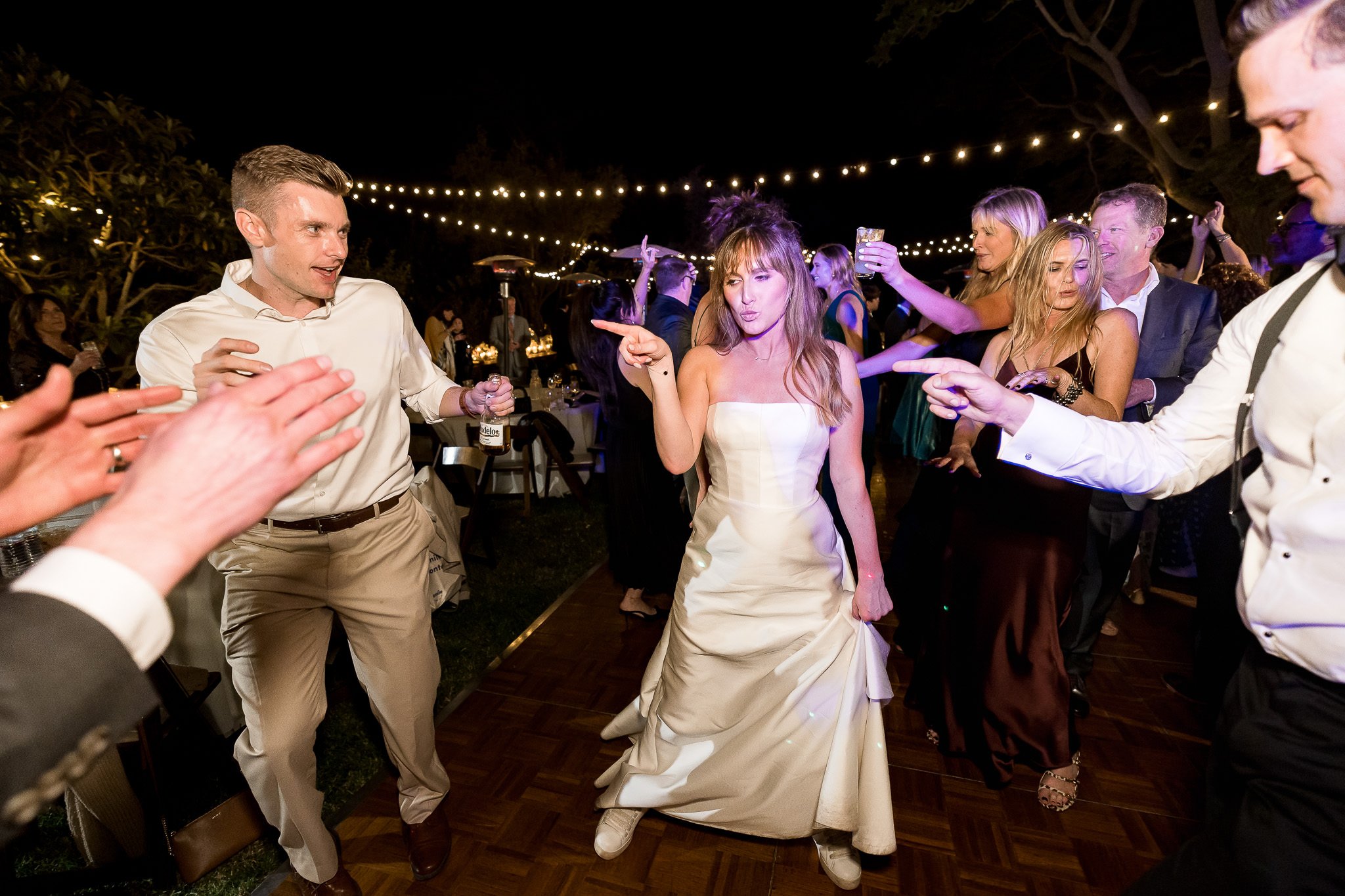
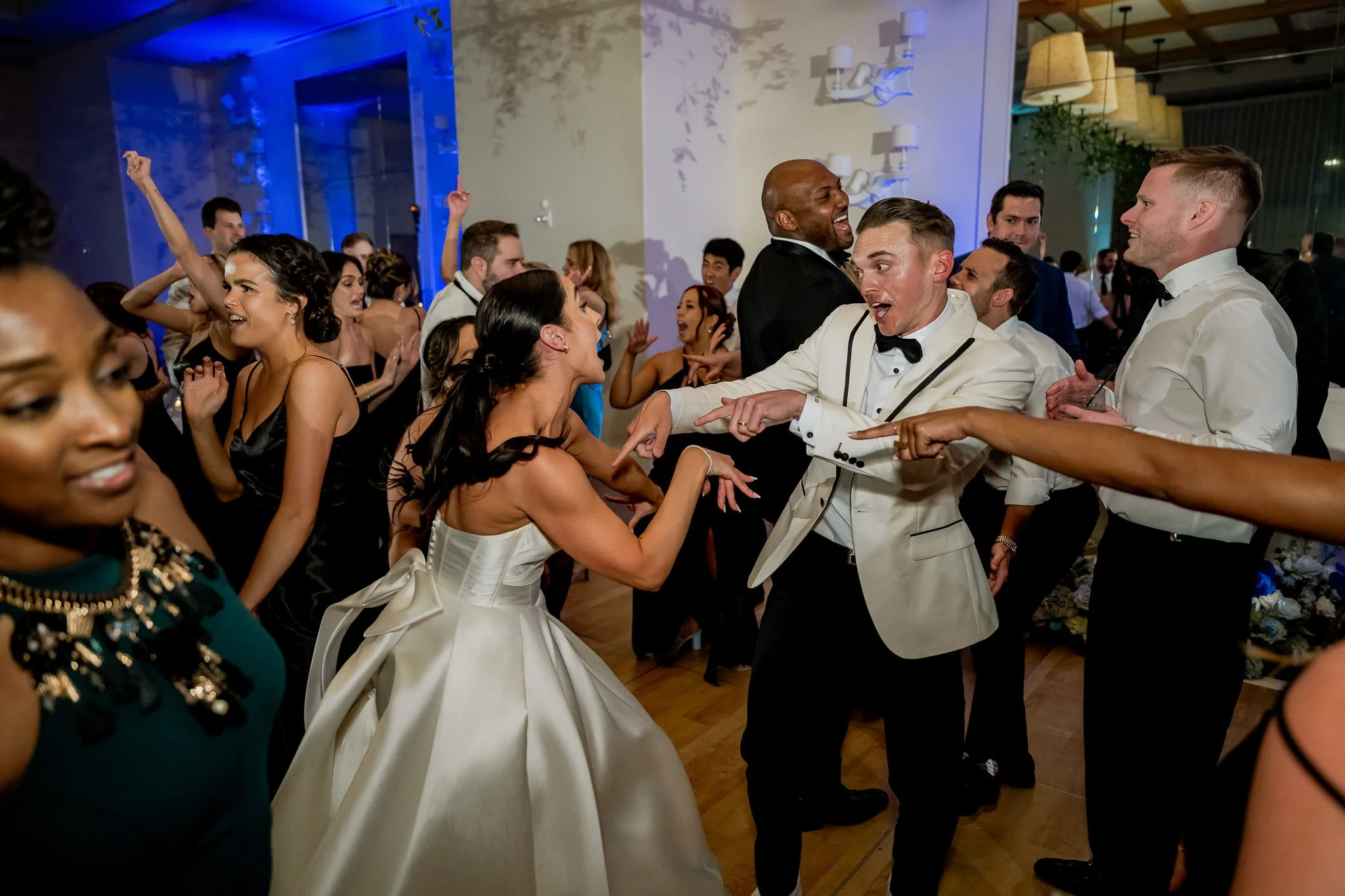
Reception dancing and celebration
All the genuine moments between big events
These happen with zero direction from us. You're living your day; we're capturing it.
Naturally guided portraits (25-30% of your gallery):
Couple portraits during golden hour
Family formal portraits
Bridal party moments
These use the gentle direction techniques we've outlined—movement, prompts, connection-based posing.
Stylized editorial moments (10-15% of your gallery):
Detail shots (rings, dress, invitations)
Architectural venue showcase
Dramatic portraits using specific light
Want to understand exactly how we blend documentary and editorial throughout your day? Read our complete guide on documentary and editorial wedding photography to see the full approach.
The point: You're not being directed and posed for hours. Portrait sessions are brief, efficient, and use techniques specifically designed for camera-shy couples. The rest of your day is captured in a candid style.
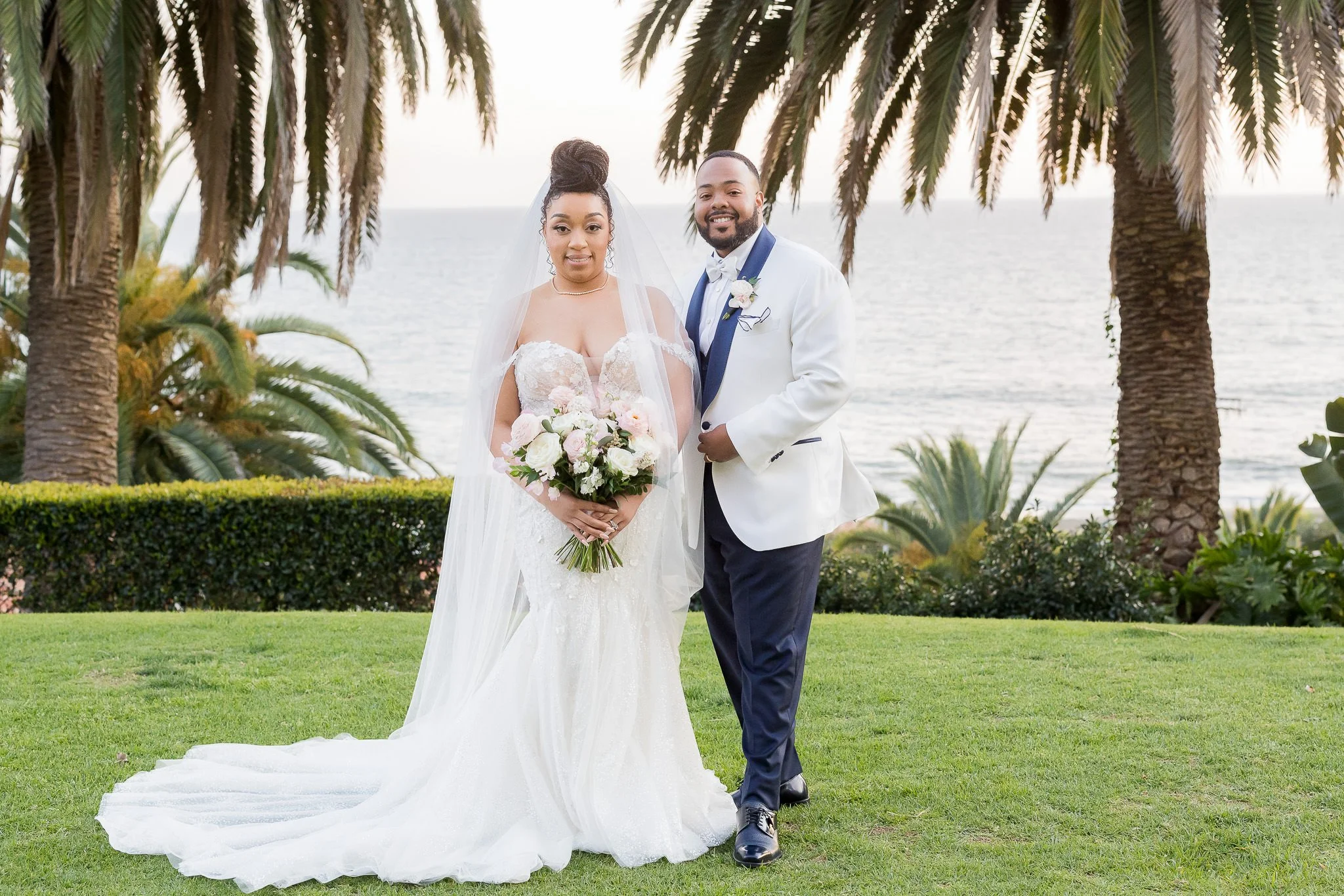
Mental Preparation: How to Stop Overthinking
Camera-shy couples are often overthinkers. You're analyzing everything: how you look, what your face is doing, whether you're standing right, what the photographer is thinking.
This mental spiral makes everything worse.
Here's how to manage it:
Before the Portrait Session Starts
Reframe the purpose:
You're not there to create perfect photos. You're there to spend 25 minutes with the person you love while someone captures it. The photos are a byproduct of that time together, not the primary goal.
Set an intention:
Before we start, decide: "For the next 25 minutes, I'm going to focus on my partner and trust that the photographer knows what they're doing."
Remember: We've done this hundreds of times:
You're doing this for the first time. We've guided hundreds of camera-shy couples through this exact process. Trust that we know what we're doing so you don't have to monitor it.
During the Session
When you catch yourself overthinking:
Redirect to your partner:
The moment you notice you're thinking about the camera, physically look at your partner and refocus on them.
Listen to our directions actively:
If we're asking you to do something specific, concentrate on executing that action. "Walk toward me and tell her about your favorite date" - think about the story, not the camera.
Trust that we'll tell you if something needs adjusting:
You don't need to monitor yourself. If something looks off, we'll gently adjust it. Your job is just to follow directions and connect with your partner.
The Mindfulness Approach
Single-point focus:
Instead of letting your mind wander to all your anxieties, pick one single thing to focus on:
The feeling of your partner's hand
Your breathing
The specific prompt we just gave you
Your partner's eyes
Bringing yourself back:
Every time your mind drifts to "How do I look?" or "Is this working?", physically bring your attention back to that single point of focus.
It's like meditation—the practice is in noticing when you've drifted and gently bringing yourself back.
What If You Can't Stop Laughing?
Nervous laughter is one of the most common camera-shy responses. The moment gets intense, you feel vulnerable, and suddenly you're giggling uncontrollably.
First: This is completely normal and not a problem.
How we handle nervous laughter:
We embrace it, not suppress it:
"Keep laughing—this is perfect. Laugh at each other. Make each other laugh harder."
Trying to suppress laughter makes it worse and creates tension. Leaning into it creates genuine, joyful images.
We use it productively:
Some of the best portraits come from uncontrollable laughter. The expressions are genuine, the joy is real, and the images feel alive.
We give you time to compose if needed:
If you genuinely need a moment to calm down, we pause. "Take a breath, reset, and when you're ready we'll try something different."
We switch approaches:
If laughter is preventing more serious portraits, we shift to playful, energetic directions that match your current mood. Then later, when you've relaxed, we can get quieter, more intimate moments.
Why nervous laughter is actually good:
It means you're releasing tension rather than holding it. The laughter phase usually lasts 3-5 minutes, and then you're completely relaxed and comfortable for the rest of the session.
We'd rather have 5 minutes of giddy laughter followed by 20 minutes of comfortable, natural portraits than 25 minutes of forced seriousness and tension.
The "Can We Skip This" Conversation
Some camera-shy couples ask: "Can we just skip the couple portraits? Or make them really short?"
We get it. The anxiety is real, and the temptation to just avoid the uncomfortable thing is strong.
Here's our honest answer:
Yes, technically we can skip them or make them very brief. But we've never had a couple—not one—who regretted doing portraits. We've had many couples who regretted not doing enough.
Why you'll be glad you did them:
In the moment: Once you're past the first 2-3 minutes, it's actually enjoyable. Couples consistently tell us "That wasn't nearly as bad as I thought. I actually kind of had fun."
One week later: When you see your portrait previews and realize how beautiful they are, you'll be glad you pushed through the discomfort.
One year later: The portraits are the images you frame, display, and show people. The candid shots are wonderful, but the portraits are what become your "wedding photos" in the traditional sense.
Ten years later: You'll look at those portraits and remember not just what you looked like, but how you felt. They become increasingly precious with time.
The compromise for severe anxiety:
If you're genuinely dreading a 30-minute portrait session, we can structure it differently:
Shorter sessions split up: Two 10-minute sessions instead of one 25-minute session
Golden hour only: Focus only on the best light, accept fewer portraits
Integrated approach: Capture portraits throughout the day opportunistically rather than one dedicated session
But in our experience, the structured 25-minute session produces the best results and feels easier than you expect.
Camera Shyness and True-to-Life Editing
One final aspect that eases anxiety for camera-shy couples: our editing philosophy.
We use true-to-life editing that honors how you actually looked on your wedding day.
What this means:
Your wedding colors are accurate. Your skin tones are natural. The light is authentic to the moment. You look like yourself, just beautifully captured.
What we don't do:
Heavy filters, dramatic color shifts, moody dark editing, or artificial effects that change the reality of your day.
Why this matters for camera-shy people:
When you see your photos, you'll recognize yourself. You won't have that disconnect of "That's beautiful but it doesn't look like me."
The editing enhances what's already there—it doesn't create something that didn't exist.
Natural retouching:
We do subtle, natural retouching:
Smoothing skin
Softening harsh shadows
Removing temporary blemishes
Minor, natural refinements
But we're not transforming you into someone else. The goal is "the best version of how you actually looked that day," not "a heavily edited version that doesn't reflect reality."
How to Talk to Your Photographer About Camera Shyness
Here's something important: Tell us you're camera-shy.
Many couples are embarrassed to admit this, thinking it makes them difficult or high-maintenance.
The opposite is true. When you tell us about your specific anxieties, we can adapt our approach to work specifically for you.
What to communicate during your consultation:
Your specific triggers:
"I hate close-ups of my face"
"I'm really self-conscious about my arms"
"I tense up when someone says 'smile'"
"My partner is super comfortable but I'm not"
Your comfort levels:
"We're not big on PDA - keep it subtle"
"I prefer to keep moving, standing still makes me anxious"
"I need a lot of direction, don't assume I know what to do"
Your past experiences:
"Our last photo experience was terrible and made me more anxious"
"I've never been photographed professionally and don't know what to expect"
"Every photo I've ever seen of myself I've hated"
This information helps us:
Plan our approach specifically for you
Avoid your triggers
Give you the right amount/type of direction
Set realistic expectations
What happens after you tell us:
We adapt everything. The engagement session locations, the types of direction we use, the pacing of your wedding portrait session—all of it gets customized to your specific needs.
You're not being difficult by having anxieties. You're giving us the information we need to serve you well.
The Truth About Camera Shyness and Wedding Photos
Here's what we've learned photographing hundreds of camera-shy couples over the years:
The problem is never that you're "not photogenic." The problem is that most photographers don't know how to direct you in a way that feels natural and comfortable.
The difference between stiff, awkward portraits and natural, beautiful ones isn't in you changing who you are. It's in finding photographers who:
Give movement-based direction instead of static poses
Keep you focused on each other instead of the camera
Work efficiently so you're not exhausted
Use conversation and prompts instead of vague "smile" commands
Understand the psychology of camera shyness and adapt accordingly
Your job isn't to be a model. Your job is to show up, trust the process, focus on your partner, and let us handle the rest.
At One Story, approximately 50% of our couples tell us they're camera-shy during initial consultations.
By the time they see their wedding galleries, every single one has been surprised by:
How comfortable the portrait session felt
How natural they look in the images
How much they love portraits they thought they'd hate
How the 25 minutes felt more like 10
The difference isn't that they suddenly became different people. The difference is that we know how to work with camera-shy couples in a way that honors their discomfort while creating beautiful, natural results.
You don't need to change. You need a photographer who knows how to work with you exactly as you are.
Ready to Feel Comfortable in Front of the Camera?
If you're camera-shy and worried about your wedding photos, let's talk about how we'll make your portrait session feel natural, comfortable, and maybe even enjoyable.
We've worked with hundreds of couples who said "I hate being photographed" and helped them create portraits they absolutely love—not by making them into models, but by using techniques specifically designed for people who don't love being in front of a camera.
Ready to talk about your Orange County wedding?
Let's start a conversation about how we'll document your authentic story.
Find a Time to Meet with us
Learn more about our Southern California Wedding Photography Services
Orange County Wedding Photographer | Los Angeles Wedding Photographer | San Diego Wedding Photographer | Santa Barbara Wedding Photographer